Strattera: Uses, Dosage, Side Effects, and Safety Guide
Strattera works differently from most other ADHD medications on the market, because it’s not a stimulant at all. Instead, it selectively blocks the reuptake of norepinephrine, which sets it apart from the amphetamine- and methylphenidate-based products covered elsewhere in this guide series. Since it isn’t a controlled substance, Strattera doesn’t carry the same abuse-potential boxed warning as stimulants — but it does carry its own serious warnings, which this page covers in detail.
The information below reflects current FDA prescribing information for Strattera. It’s meant for general education, so it doesn’t replace advice from a licensed prescriber or pharmacist.
Product Overview
What Is Strattera?
Strattera delivers atomoxetine, a selective norepinephrine reuptake inhibitor, in an oral capsule. Eli Lilly and Company first brought it to market in 2002, making it the first non-stimulant medication approved specifically for ADHD. Because it works through a different mechanism than stimulants, prescribers often turn to it when stimulant side effects, prior substance use history, or personal preference make a non-stimulant option preferable.
Active Ingredient
The active ingredient is atomoxetine hydrochloride, the R(-) isomer of atomoxetine.
Brand Name and Generic Name
Eli Lilly and Company manufactures and distributes the brand-name Strattera. Since the patent expired, generic atomoxetine has also become widely available from other manufacturers.
Drug Classification
Strattera belongs to a drug class called selective norepinephrine reuptake inhibitors (NRIs). Unlike the amphetamine- and methylphenidate-based medications covered elsewhere in this series, atomoxetine is not a controlled substance, so it carries no DEA schedule.
FDA-Approved Uses
The FDA approves Strattera for one indication:
- Attention deficit hyperactivity disorder (ADHD), as part of a total treatment program, in both pediatric patients and adults.
Notably, Strattera is not approved for major depressive disorder, even though it shares some mechanistic similarity with certain antidepressants.
Evidence-Supported Off-Label Uses
Occasionally, clinicians explore atomoxetine off-label for conditions like binge eating disorder or certain anxiety presentations that overlap with ADHD, since its norepinephrine effects touch on related neural pathways. Because these uses fall outside the approved indication, they should only happen under close, individualized prescriber judgment.
How It Works
Atomoxetine selectively inhibits the presynaptic norepinephrine transporter, which increases norepinephrine availability in the brain. Because this mechanism differs fundamentally from how stimulants work — they primarily target dopamine — Strattera tends to build its effect gradually, rather than producing the immediate symptom relief typical of stimulant medications.
Product Information Table
| Attribute | Detail |
|---|---|
| Brand | Strattera |
| Generic | Atomoxetine hydrochloride |
| Active Ingredient | Atomoxetine hydrochloride |
| Drug Class | Selective norepinephrine reuptake inhibitor (non-stimulant) |
| Manufacturer | Eli Lilly and Company; generic manufacturers also available |
| Prescription Status | Prescription only |
| Controlled Substance Status | Not a controlled substance |
| Dosage Forms | Capsule |
| Strengths | 10 mg, 18 mg, 25 mg, 40 mg, 60 mg, 80 mg, 100 mg |
| Administration Route | Oral |
| Onset of Action | Peak levels reached in about 1–2 hours; full symptom benefit often takes several weeks |
| Duration of Effect | Once- or twice-daily dosing provides continuous coverage rather than a single “peak and wear-off” window |
| Half-Life | About 5 hours in most people; roughly 21–24 hours in a genetically distinct subgroup (see below) |
| Storage | Room temperature, approximately 59–86°F (15–30°C) |
Available Strengths
Because Strattera comes in seven distinct capsule strengths, prescribers can fine-tune the dose closely as they titrate toward an effective level.
| Strength | Dosage Form | Color |
|---|---|---|
| 10 mg | Capsule | Opaque white / opaque white |
| 18 mg | Capsule | Gold / opaque white |
| 25 mg | Capsule | Opaque blue / opaque white |
| 40 mg | Capsule | Opaque blue / opaque blue |
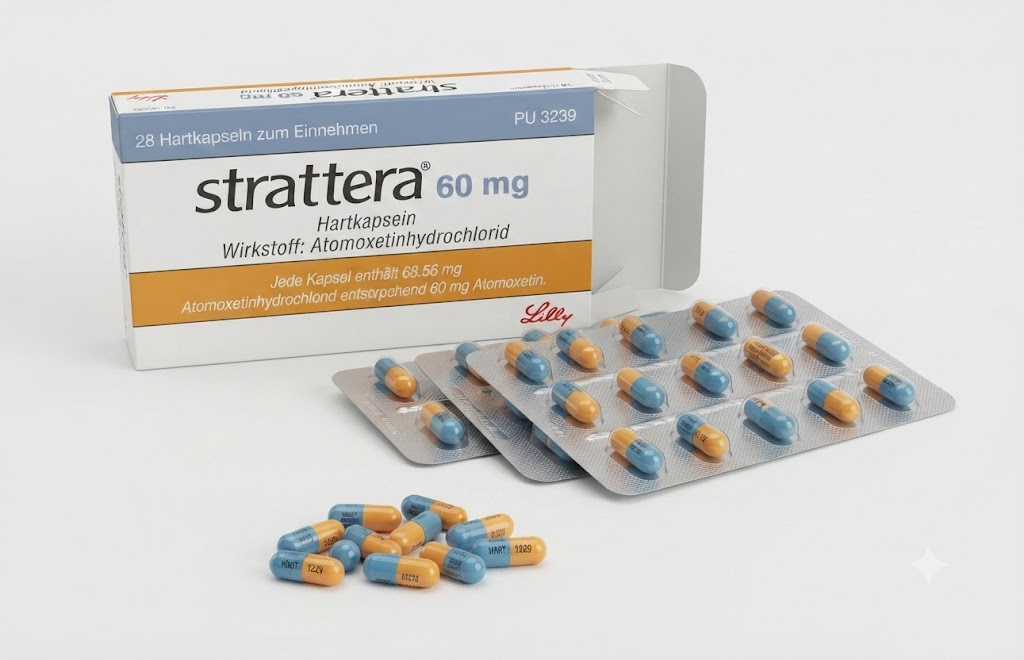
| 60 mg | Capsule | Opaque blue / gold |
| 80 mg | Capsule | Opaque brown / opaque white |
| 100 mg | Capsule | Opaque brown / opaque brown |
Since generic atomoxetine may look different depending on the manufacturer, patients should confirm with their pharmacist if a refilled capsule looks unfamiliar.
Dosage Guide
Because dosing depends on body weight, age, and how the body metabolizes atomoxetine, a prescriber always sets the exact starting point and any adjustments.
Children and Adolescents (Up to 70 kg)
Treatment typically starts at about 0.5 mg/kg per day, then increases after a minimum of three days to a target of roughly 1.2 mg/kg per day, taken either as a single morning dose or split between morning and late afternoon/early evening. Since studies haven’t shown extra benefit above this target, total daily dosing shouldn’t exceed 1.4 mg/kg or 100 mg, whichever is lower.
Adults and Larger Adolescents (Over 70 kg)
For children and adolescents over 70 kg, as well as adults, treatment typically starts at 40 mg per day, then increases after at least three days to a target of about 80 mg per day. If response remains suboptimal after two to four more weeks, a prescriber may raise the dose to a maximum of 100 mg per day.
Maintenance Treatment
Because ADHD often requires ongoing management, many patients continue Strattera well beyond the initial titration period. A prescriber who elects to continue treatment long-term should periodically reassess whether it’s still providing meaningful benefit.
Older Adults
The FDA hasn’t evaluated Strattera’s safety, effectiveness, or pharmacokinetics specifically in geriatric patients, so prescribers typically apply added caution and closer monitoring in this age group.
Kidney Disease
Because atomoxetine’s elimination isn’t primarily kidney-dependent, patients with kidney impairment — including those with end-stage renal disease — generally don’t need dose adjustments, even though their overall drug exposure runs somewhat higher.
Liver Disease
Unlike kidney function, liver function does significantly affect atomoxetine levels, so dose adjustments matter here. For patients with moderate liver impairment (Child-Pugh Class B), prescribers typically reduce the initial and target doses to half the usual amount. For severe impairment (Child-Pugh Class C), they typically reduce doses to a quarter of the usual amount.
How to Take It
Before Meals
Patients can take Strattera with or without food. Even so, taking it with food can lower peak blood levels somewhat and delay when those peak levels occur, without changing the total amount absorbed.
After Meals
As above, food timing stays flexible for Strattera. Because consistency matters more than exact timing, taking it around the same time each day tends to help patients remember doses reliably.
Missed Dose
If a dose slips by, patients should take it as soon as they remember that same day — but they should never exceed the total prescribed daily amount within any 24-hour period. If a full day gets missed entirely, patients should simply skip that day rather than doubling the next day’s dose.
Discontinuing Treatment
Unlike some psychiatric medications, Strattera doesn’t require a gradual taper when stopping. Even so, patients should discuss any plan to stop treatment with their prescriber first, since ADHD symptoms may return.
Overdose
Because atomoxetine overdose can cause seizures, abnormal heart rhythms, and significant nervous system effects, anyone who suspects an overdose should call Poison Control at 1-800-222-1222 or seek emergency medical care right away.
Storage
Patients should store Strattera at room temperature, away from children, in a household medicine location. Because atomoxetine acts as an ocular irritant, capsules shouldn’t be opened, chewed, or crushed — if capsule contents ever contact the eyes, patients should flush them with water immediately and seek medical advice.
Benefits
Because Strattera isn’t a controlled substance, it offers a meaningful option for patients who want to avoid stimulant-related abuse risk, who have a personal or family history of substance use disorder, or who experience unwanted side effects from stimulants. Its once- or twice-daily dosing also provides continuous, all-day coverage rather than the peak-and-wear-off pattern typical of many stimulants. In addition, clinical trials found that Strattera doesn’t worsen coexisting tics or anxiety in patients who have those conditions alongside ADHD — a meaningful advantage for some patients.
Side Effects
Because atomoxetine affects several body systems, side effects range from mild to serious, and they differ somewhat between children and adults.
Common Side Effects (Children and Adolescents)
- Upset stomach
- Decreased appetite
- Nausea or vomiting
- Dizziness
- Tiredness
- Mood swings
Common Side Effects (Adults)
- Constipation
- Dry mouth
- Nausea
- Decreased appetite
- Dizziness
- Sexual side effects, including erectile dysfunction
- Trouble passing urine
Serious Side Effects
- Suicidal thoughts, especially early in treatment or after a dose change
- Severe liver injury
- Sudden death, stroke, or heart attack, particularly in patients with underlying heart conditions
- New or worsening psychiatric symptoms, including mania or psychosis
- Increased aggression or hostility
- Slowed growth in children
- Urinary retention or hesitancy
- Priapism (painful or non-painful erection lasting more than four hours)
- Serious allergic reactions
Emergency Symptoms
Because these signs can indicate a medical emergency, patients should seek immediate care for:
- Suicidal thoughts or actions
- Signs of liver injury, such as yellowing skin or eyes, dark urine, or unexplained flu-like symptoms
- Chest pain, shortness of breath, or fainting
- An erection lasting more than four hours
- Signs of a severe allergic reaction, such as facial or throat swelling
Drug Interactions
Because atomoxetine affects both the nervous system and cardiovascular function, it interacts meaningfully with several other substances.
Prescription Drugs
Combining Strattera with monoamine oxidase inhibitors (MAOIs) is contraindicated, since doing so risks serious, sometimes fatal reactions resembling neuroleptic malignant syndrome. Strong CYP2D6 inhibitors — including paroxetine, fluoxetine, and quinidine — substantially raise atomoxetine blood levels, so dose adjustments often become necessary. Antihypertensive drugs and pressor agents also warrant caution, given atomoxetine’s own effects on blood pressure.
OTC Medicines
Systemically administered albuterol (or other beta2 agonists) can have its cardiovascular effects amplified when combined with atomoxetine, potentially raising heart rate and blood pressure further. Because of this, patients using oral or intravenous albuterol should discuss the combination with their prescriber.
Alcohol
Interestingly, clinical data show that atomoxetine doesn’t change the intoxicating effects of alcohol, which sets it apart from many other psychiatric medications. Even so, patients should still discuss alcohol use with their prescriber, since individual response can vary.
Supplements
The current label doesn’t flag specific supplement interactions, but patients should disclose all supplement use to their prescriber regardless, since some products can affect liver metabolism or blood pressure.
Herbal Products
As with supplements generally, patients should tell their prescriber about any herbal products they’re using, particularly those marketed for mood, energy, or weight loss.
Foods
Food doesn’t significantly change how much atomoxetine the body absorbs, though it can modestly lower and delay peak blood levels. Because of this, no major food restriction applies.
Warnings
Strattera carries an FDA boxed warning — the strongest safety warning the agency issues — for increased risk of suicidal ideation in children and adolescents. Clinical trials found this risk highest early in treatment and around dose changes, which is why close monitoring matters most during those periods.
Beyond that, Strattera’s warnings cover severe liver injury (which can occur even after clinical trials showed no signal, based on postmarketing reports), serious cardiovascular events including sudden death, increased blood pressure and heart rate, new psychotic or manic symptoms, aggressive behavior or hostility, allergic reactions, urinary retention, priapism, and effects on growth in pediatric patients. Because atomoxetine’s blood levels vary significantly based on how a person metabolizes it, the label also addresses dosing considerations tied to that metabolic difference.
Contraindications
Patients shouldn’t take Strattera if they:
- Have a known hypersensitivity to atomoxetine or other product components
- Are currently taking, or have taken within the past two weeks, a monoamine oxidase inhibitor (MAOI)
- Have narrow angle glaucoma
- Have, or have a history of, pheochromocytoma (a rare adrenal gland tumor)
- Have severe cardiovascular disorders that could worsen with clinically significant increases in blood pressure or heart rate
Pregnancy
Because available published data remain insufficient to establish a clear drug-associated risk, prescribers weigh the potential benefits against the uncertainty on a case-by-case basis. Animal studies showed mixed results — some studies in rabbits and rats reported adverse developmental findings at high doses, while others showed no effect. A pregnancy exposure registry tracks outcomes for people exposed to ADHD medications, including Strattera, during pregnancy, so healthcare providers can register patients to help build the evidence base.
Breastfeeding
No human data currently exist on whether atomoxetine passes into breast milk, though it does appear in animal milk, which suggests it likely transfers to human milk as well. Because of this uncertainty, a prescriber should weigh the benefits of breastfeeding against the mother’s clinical need for treatment.
Monitoring Requirements
Throughout treatment, prescribers typically monitor:
- Signs of suicidal thinking or behavior, especially early in treatment and after dose changes
- Liver function symptoms, such as jaundice, dark urine, or unexplained fatigue
- Blood pressure and heart rate at baseline and after dose increases
- Height and weight in pediatric patients
- Signs of new or worsening psychiatric symptoms, aggression, or hostility
- Personal or family history of bipolar disorder before starting treatment
Storage Instructions
Patients should store Strattera at room temperature, roughly between 59°F and 86°F (15°C to 30°C), away from children. Because capsules shouldn’t be opened, storing them in their original container helps prevent accidental exposure to the powder inside.
Frequently Asked Questions
What is Strattera used for?
Strattera treats attention deficit hyperactivity disorder (ADHD) in both pediatric patients and adults, as part of a broader treatment program that often includes counseling or behavioral support. Because it’s not approved for major depressive disorder, despite some mechanistic overlap with antidepressants, a healthcare provider evaluates ADHD specifically before prescribing it.
Is Strattera a stimulant?
No. Unlike Adderall, Ritalin, or Vyvanse, Strattera works as a selective norepinephrine reuptake inhibitor rather than a stimulant. Because of this, it’s not a controlled substance, and it doesn’t carry the same abuse-potential warnings that stimulant medications do.
What is the typical starting dose of Strattera?
For children and adolescents up to 70 kg, treatment usually starts at about 0.5 mg/kg per day, increasing to a target of roughly 1.2 mg/kg per day after at least three days. For larger adolescents and adults, treatment typically starts at 40 mg per day, increasing to a target of about 80 mg per day. A prescriber adjusts these starting points based on response and tolerability.
How long does it take for Strattera to start working?
While peak blood levels appear within one to two hours of a dose, full symptom improvement often takes several weeks to become noticeable — unlike stimulants, which tend to produce effects the same day. Because of this gradual onset, patients shouldn’t expect immediate results the way they might with a stimulant medication.
Can Strattera be taken with food?
Yes, Strattera can be taken with or without food. Even so, taking it with food modestly lowers and delays peak blood levels, though it doesn’t change the total amount the body absorbs. More adhd products
What happens if a dose is missed?
If a dose is missed, patients should take it as soon as they remember that same day, but they shouldn’t exceed the total prescribed daily amount within any 24-hour period. If an entire day is missed, they should simply skip it rather than doubling the next day’s dose.
Why does Strattera carry a suicide-risk warning?
Clinical trials found a higher rate of suicidal thinking among children and adolescents taking Strattera compared with placebo, particularly early in treatment and around dose changes. Although no suicides occurred in these trials, the finding was significant enough that the FDA required a boxed warning, and it’s why close monitoring matters most during the first few months of treatment.
Can Strattera cause liver damage?
Yes, in rare cases. Although clinical trials involving about 6,000 patients didn’t detect liver injury, postmarketing reports have identified rare but serious cases, including some that led to liver failure. Because of this, patients should seek medical care right away if they notice yellowing skin or eyes, dark urine, itching, or unexplained flu-like symptoms.
Is Strattera addictive?
No, not in the way stimulant ADHD medications can be. Because Strattera isn’t a controlled substance, and because a formal abuse-potential study found no pattern suggesting stimulant-like or euphoric effects, it carries a much lower risk of misuse. Clinical experience also hasn’t shown a withdrawal syndrome when patients stop taking it.
What are the most common side effects of Strattera?
In children and adolescents, the most common side effects include upset stomach, decreased appetite, nausea or vomiting, dizziness, tiredness, and mood swings. In adults, common side effects include constipation, dry mouth, nausea, decreased appetite, dizziness, and sexual side effects. Most of these are mild, but anything severe or persistent should be reported to a prescriber.
Can Strattera interact with antidepressants?
Yes, in more than one way. Combining Strattera with MAOIs is strictly contraindicated because of the risk of a severe reaction. Meanwhile, certain other antidepressants — particularly paroxetine and fluoxetine — can significantly raise atomoxetine blood levels by slowing its breakdown, which often requires a dose adjustment.
Does Strattera affect everyone the same way?
Not exactly. Because atomoxetine is broken down mainly through a liver enzyme called CYP2D6, and because a small percentage of people (about 7% of Caucasians and 2% of African Americans) have reduced activity in this pathway, these “poor metabolizers” experience much higher drug levels and a longer half-life than most people. As a result, they may need closer monitoring for side effects even at standard doses.
Can I stop taking Strattera abruptly?
Yes. Unlike many other psychiatric medications, Strattera doesn’t require a gradual taper, and stopping it hasn’t been associated with a withdrawal syndrome in clinical studies. Even so, patients should still tell their prescriber before stopping, since ADHD symptoms typically return once the medication clears the system.
Is Strattera safe during pregnancy?
Because available data remain insufficient to establish a clear risk, and because animal studies showed mixed findings, a prescriber weighs the potential benefits of treatment against the uncertainty involved. A pregnancy exposure registry tracks outcomes for people exposed to Strattera during pregnancy, and anyone who is pregnant or planning pregnancy should discuss their options directly with their prescriber.
What should I do if too much Strattera was taken?
Suspected overdose is a medical emergency, since it can cause seizures, abnormal heart rhythm, and significant nervous system effects. Because of this, patients should call Poison Control at 1-800-222-1222 or go to the nearest emergency room immediately rather than waiting to see if symptoms improve.
Conclusion
Strattera occupies a distinct place among ADHD treatments, because it works through norepinephrine rather than dopamine, and because it isn’t a controlled substance at all. That non-stimulant profile brings real advantages — lower abuse potential, all-day symptom coverage, and no tapering requirement when stopping — but it also comes with its own serious considerations, including the boxed suicidality warning, rare but serious liver injury risk, and the CYP2D6 metabolizer differences that shape how strongly the drug affects different patients. Because Strattera’s risk profile differs so much from stimulant medications, patients and caregivers benefit from understanding these distinctions clearly before starting treatment.
| Pill | 90, 100, 150, 200 |
|---|
Be the first to review “Strattera”
Related products
ADHD
ADHD
ADHD
ADHD
ADHD
ADHD
ADHD
Reviews
There are no reviews yet.