
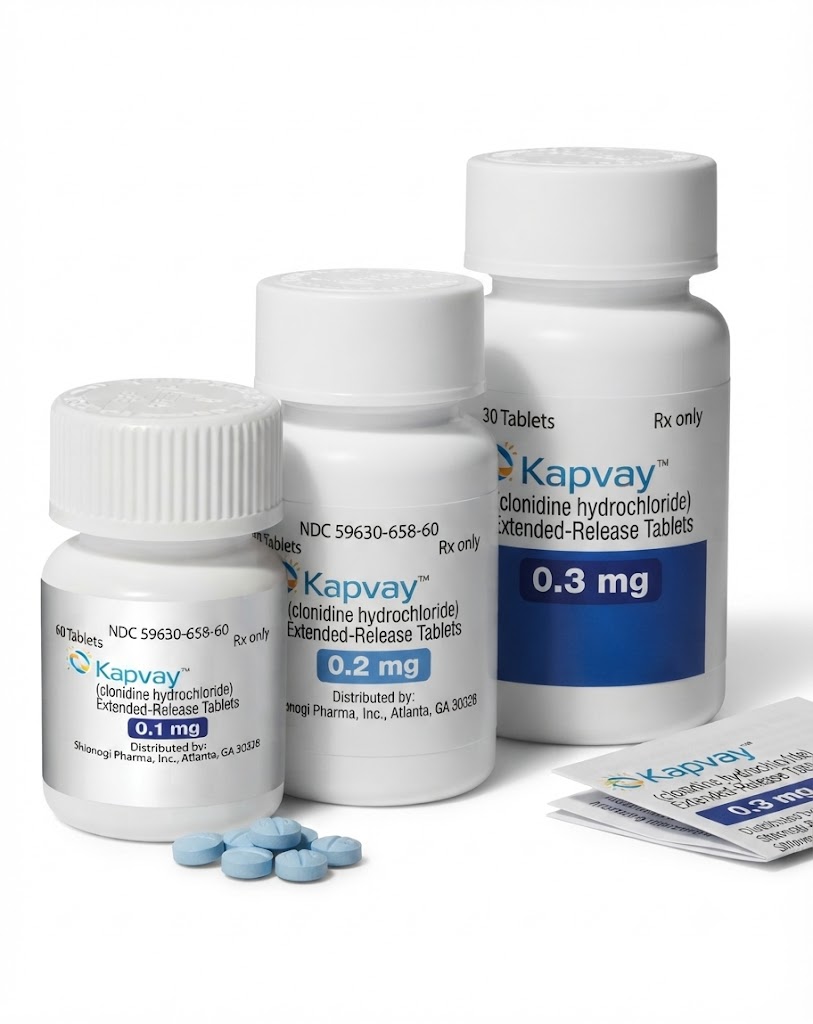

Kapvay: Uses, Dosage, Side Effects, and Safety Guide
Kapvay brings an old blood pressure medication into new territory: extended-release clonidine, repurposed and FDA-approved specifically for ADHD. Because it isn’t a stimulant, prescribers often reach for it when a child can’t tolerate stimulant side effects, needs help with sleep alongside daytime symptoms, or needs an add-on to boost a stimulant that isn’t working well enough alone. Since Kapvay isn’t a controlled substance, its safety concerns center on blood pressure and sedation rather than abuse potential.
The information below reflects current FDA prescribing information for Kapvay. It’s meant for general education, so it doesn’t replace advice from a licensed prescriber or pharmacist.
Product Overview
What Is Kapvay?
Kapvay delivers clonidine hydrochloride in an extended-release tablet, engineered specifically for ADHD treatment. The FDA first approved clonidine back in 1974 as a blood pressure medication (marketed as Catapres), but Kapvay’s extended-release version, approved decades later, targets ADHD symptoms instead. Because its release profile differs meaningfully from older clonidine products, Kapvay isn’t simply “Catapres, slowed down” — the two behave differently once absorbed.
Active Ingredient
The active ingredient is clonidine hydrochloride, formulated in an extended-release tablet that spreads absorption out over the day.
Brand Name and Generic Name
Concordia Pharmaceuticals distributes Kapvay under license. Generic clonidine hydrochloride extended-release tablets are also available from other manufacturers.
Drug Classification
Kapvay belongs to a class called centrally acting alpha-2 adrenergic agonists — the same broad class as guanfacine (Intuniv), though clonidine and guanfacine aren’t the same molecule. Because it isn’t a controlled substance, it carries no DEA schedule.
FDA-Approved Uses
The FDA approves Kapvay for one indication:
- Attention deficit hyperactivity disorder (ADHD) in children and adolescents ages 6 to 17, used either as monotherapy or as an add-on to stimulant medication.
Its approval rests on two controlled trials — one testing Kapvay alone, and one testing it added to patients already on a stable stimulant regimen who hadn’t achieved an optimal response.
Evidence-Supported Off-Label Uses
Clinicians sometimes prescribe clonidine off-label for sleep difficulties associated with ADHD, Tourette’s syndrome or tic disorders, and opioid withdrawal symptoms. Because Kapvay specifically hasn’t been studied for most of these uses, off-label prescribing typically draws on evidence from other clonidine formulations instead, and should only happen under individualized prescriber judgment.
How It Works
Clonidine stimulates alpha-2 adrenergic receptors in the brainstem, which reduces sympathetic nervous system output to the heart and blood vessels. This lowers peripheral resistance, renal vascular resistance, heart rate, and blood pressure all at once. Researchers believe its ADHD benefit relates to this same calming effect on brain circuits involved in attention and impulse control, though the exact mechanism remains incompletely understood.
Product Information Table
| Attribute | Detail |
|---|---|
| Brand | Kapvay |
| Generic | Clonidine hydrochloride extended-release |
| Active Ingredient | Clonidine hydrochloride |
| Drug Class | Central alpha-2 adrenergic agonist (non-stimulant) |
| Manufacturer | Concordia Pharmaceuticals Inc.; generic manufacturers also available |
| Prescription Status | Prescription only |
| Controlled Substance Status | Not a controlled substance |
| Dosage Forms | Extended-release tablet |
| Strengths | 0.1 mg, 0.2 mg |
| Administration Route | Oral |
| Onset of Action | Gradual; full ADHD benefit often takes one to two weeks to appear |
| Duration of Effect | Twice-daily dosing, with an equal or higher portion at bedtime |
| Half-Life | Roughly 12–16 hours for clonidine generally, extending up to 41 hours in patients with severe kidney impairment |
| Storage | Room temperature, protected from excess heat and moisture |
Available Strengths
Kapvay tablets come in two strengths, both designed to be swallowed whole.
| Strength | Dosage Form | Appearance |
|---|---|---|
| 0.1 mg | Extended-release tablet | Round, white, non-scored, with debossing on one side |
| 0.2 mg | Extended-release tablet | Extended-release tablet, distinct from the 0.1 mg strength |
Because generic clonidine ER may look different depending on the manufacturer, patients should confirm with their pharmacist if a refilled tablet looks unfamiliar.
Dosage Guide
Kapvay’s dosing follows a fixed titration schedule rather than a weight-based table, which sets it apart from Intuniv.
Children and Adolescents (Ages 6–17)
Treatment starts with one 0.1 mg tablet at bedtime for the first week. From there, the daily dose increases in 0.1 mg increments at weekly intervals until reaching the desired response, given as two doses per day, with an equal or higher portion at bedtime to help with sedation and sleep. Doses above 0.4 mg per day (0.2 mg twice daily) haven’t been evaluated in clinical trials and aren’t recommended.
Adjunctive Use With a Stimulant
When Kapvay gets added to an existing stimulant regimen, a prescriber may also adjust the stimulant dose based on how the patient responds to the combination — the two medications get titrated together rather than in isolation.
Adults
Since the FDA hasn’t approved Kapvay for adult ADHD, the label doesn’t include a corresponding adult dosing regimen for this indication.
Older Adults
No information is available on how age affects clonidine’s effects in geriatric patients, so this population falls outside Kapvay’s studied group.
Kidney Disease
Because clonidine’s half-life stretches dramatically in severe kidney impairment — up to 41 hours, compared with 12 to 16 hours in patients with normal kidney function — the starting dose should reflect the degree of impairment, with cautious titration and close monitoring for hypotension and bradycardia. Since routine hemodialysis removes only a minimal amount of clonidine, patients don’t need a supplemental dose after dialysis sessions.
Liver Disease
Because roughly half of an absorbed clonidine dose gets metabolized in the liver, significant liver impairment may affect clearance, though the label doesn’t provide a specific dosing table for this population.
How to Take It
With or Without Food
Patients can take Kapvay with or without food, since food doesn’t significantly affect its absorption.
Swallow Whole
Because crushing, cutting, or chewing a Kapvay tablet increases how quickly it releases clonidine, patients should always swallow it whole rather than altering it in any way.
Missed Dose
If a dose gets missed, patients should simply skip it and take the next dose at its regularly scheduled time — they shouldn’t try to make up for it by taking extra medication, since exceeding the prescribed daily total raises the risk of side effects.
Switching From Other Clonidine Products
Because Kapvay isn’t interchangeable milligram-for-milligram with immediate-release clonidine or other clonidine formulations — Kapvay’s peak concentration runs about 50% lower than the same dose of immediate-release clonidine — switching between products requires a fresh titration rather than a direct substitution.
Discontinuing Treatment
Like Intuniv, Kapvay requires a gradual taper when stopping, since abrupt discontinuation can cause rebound hypertension. Prescribers typically reduce the dose by no more than 0.1 mg every three to seven days. Reported rebound symptoms have included headache, a racing heart, nausea, flushing, a warm feeling, brief lightheadedness, chest tightness, and anxiety.
Overdose
Because clonidine overdose can cause dangerously low blood pressure, a very slow heart rate, extreme drowsiness, or even breathing problems, anyone who suspects an overdose should call Poison Control at 1-800-222-1222 or seek emergency medical care right away.
Storage
Patients should store Kapvay at room temperature, away from excess heat and moisture, and out of reach of children.
Benefits
Because Kapvay isn’t a controlled substance, it gives prescribers a genuine non-stimulant option, and its bedtime-weighted dosing can specifically help children who struggle with sleep alongside their ADHD symptoms. Its evidence base also covers both standalone use and combination therapy with a stimulant, which gives families more flexibility if a single medication doesn’t fully control symptoms on its own.
Side Effects
Because clonidine affects the cardiovascular and nervous systems together, its side effects reflect that combined action.
Common Side Effects
- Somnolence (sleepiness)
- Fatigue
- Decreased appetite
- Dizziness
Less Common Side Effects
- Dry mouth
- Constipation
- Irritability
- Nightmares or sleep disturbances
Serious Side Effects
- Significant drops in blood pressure or heart rate, including fainting (syncope)
- Cardiac conduction abnormalities, especially in patients already prone to slow heart rhythms
- Rebound hypertension after abrupt discontinuation
- Excessive sedation, particularly when combined with other sedating substances
- Possible effects on fertility, based on animal studies
Emergency Symptoms
Because these signs can indicate a medical emergency, patients should seek immediate care for:
- Fainting, severe dizziness, or a very slow heartbeat
- A sudden, severe spike in blood pressure after missing doses or stopping treatment
- Signs of a severe allergic reaction, such as rash, hives, or swelling
Drug Interactions
Because clonidine affects blood pressure, heart rate, and sedation, it interacts with a fairly specific set of other substances.
Prescription Drugs
Tricyclic antidepressants may reduce clonidine’s blood-pressure-lowering effect, which can complicate treatment for patients taking both. Meanwhile, other antihypertensive medications call for extra caution when combined with Kapvay, since the effects can add up.
OTC Medicines
Because certain OTC sleep aids and cold medicines have sedating or blood-pressure-related effects, patients should check with a pharmacist before combining them with Kapvay.
Alcohol
Since clonidine can potentiate the CNS-depressive effects of alcohol, patients should avoid drinking while taking Kapvay, as the combination can intensify drowsiness well beyond either substance alone.
Supplements
The label doesn’t flag specific supplement interactions, but patients should still disclose all supplement use to their prescriber, particularly anything marketed for sleep or relaxation.
Herbal Products
As with supplements generally, herbal products with sedating or blood-pressure-related effects deserve the same disclosure and caution.
Foods
No major food restriction applies to Kapvay, since food doesn’t significantly change how the extended-release tablet gets absorbed.
Warnings
Kapvay’s warnings focus on cardiovascular and sedative effects rather than abuse potential. Because it’s designed to lower blood pressure and heart rate, prescribers titrate it slowly and monitor closely in patients at risk for hypotension, heart block, bradycardia, syncope, or cardiovascular, vascular, or cerebrovascular disease.
Beyond that, Kapvay commonly causes somnolence and sedation, so patients should use caution before driving or operating machinery until they know how it affects them, and should avoid combining it with other CNS depressants. It can also worsen certain cardiac conduction problems, especially alongside other drugs that affect the same pathways (like digitalis, calcium channel blockers, or beta-blockers), and stopping it abruptly can trigger rebound hypertension.
Contraindications
Patients shouldn’t take Kapvay if they:
- Have a history of a hypersensitivity reaction to clonidine, including generalized rash, urticaria, or angioedema
Because this list is short, Kapvay’s risk management relies more on cautious titration in at-risk patients than on absolute exclusions.
Pregnancy
Because decades of published clonidine use in pregnant women — including controlled trials, a retrospective cohort study, and case reports — haven’t identified a drug-associated risk of major birth defects, miscarriage, or adverse maternal or fetal outcomes, prescribers generally have more reassuring long-term data here than with some newer ADHD medications. A pregnancy exposure registry tracks outcomes for people exposed to ADHD medications, including Kapvay, during pregnancy. Separately, animal studies suggested Kapvay may impair fertility in both females and males of reproductive potential.
Breastfeeding
Clonidine does pass into breast milk. Because of this, breastfeeding parents using Kapvay should monitor their infant for signs of excess sedation, decreased muscle tone, or slowed breathing, and should seek medical care right away if any of these appear.
Monitoring Requirements
Throughout treatment, prescribers typically monitor:
- Blood pressure and heart rate at baseline, after dose increases, and periodically during treatment
- Signs of excessive sedation, especially early in treatment
- Blood pressure and pulse closely during any dose reduction or discontinuation
- Breastfed infants for sedation, muscle tone changes, or breathing changes, if applicable
Storage Instructions
Patients should store Kapvay at room temperature, away from excess heat and moisture, and out of reach of children.
Frequently Asked Questions
What is Kapvay used for?
Kapvay treats attention deficit hyperactivity disorder (ADHD) in children and adolescents ages 6 to 17, either used alone or added to an existing stimulant medication. Because it isn’t approved for adults, a healthcare provider evaluates a patient’s age alongside their ADHD diagnosis before prescribing it.
How is Kapvay different from immediate-release clonidine?
Both contain the same active ingredient, but Kapvay’s extended-release design produces a peak concentration roughly 50% lower than the same dose of immediate-release clonidine. Because of this difference, the two aren’t interchangeable milligram-for-milligram, and Kapvay carries the ADHD approval that immediate-release clonidine (Catapres) doesn’t have.
What is the typical starting dose of Kapvay?
Treatment starts with one 0.1 mg tablet at bedtime for the first week, then increases in 0.1 mg steps at weekly intervals based on response, given as two doses a day with a larger portion at bedtime. The maximum studied dose is 0.4 mg per day, split as 0.2 mg twice daily.
Can Kapvay be combined with a stimulant?
Yes. Kapvay’s FDA approval specifically covers use as an add-on to stimulant treatment, based on a clinical trial in patients who hadn’t achieved an optimal response to a stimulant alone. When combined, a prescriber may adjust both medications’ doses together based on how the patient responds.
Can adults take Kapvay?
Not under Kapvay’s current FDA approval, which covers only children and adolescents ages 6 to 17. Because adult dosing for ADHD hasn’t been established for this specific formulation, any adult use would fall outside the approved indication.
How long does it take for Kapvay to start working?
Full ADHD symptom improvement typically takes one to two weeks to become noticeable, since Kapvay builds its effect gradually rather than working immediately the way a stimulant does. Patients shouldn’t expect same-day results.
Can Kapvay tablets be crushed or split?
No. Because crushing, cutting, or chewing a Kapvay tablet increases how quickly it releases clonidine, patients should always swallow it whole. Altering the tablet defeats the extended-release design that spreads the dose out over the day.
What happens if a dose is missed?
If a dose is missed, patients should simply skip it and resume with the next scheduled dose — they shouldn’t double up or exceed the prescribed daily total, since doing so raises the risk of excessive sedation or low blood pressure.
Can I stop taking Kapvay abruptly?
No. Because abruptly stopping Kapvay can cause rebound hypertension — along with symptoms like headache, a racing heart, and anxiety — prescribers typically taper the dose down gradually, by no more than 0.1 mg every three to seven days.
What are the most common side effects of Kapvay?
The most frequently reported side effects, particularly when Kapvay is added to a stimulant, include sleepiness, fatigue, decreased appetite, and dizziness. Because these effects tend to be dose-related, they often become less pronounced as treatment continues.
Is Kapvay addictive?
No. Because Kapvay isn’t a controlled substance and clonidine doesn’t produce the reinforcing effects associated with stimulant medications, it carries essentially no risk of abuse or addiction.
Can Kapvay affect fertility or breastfeeding?
Animal studies suggest Kapvay may impair fertility in both females and males, though human data on this specific concern remain limited. Since clonidine does pass into breast milk, breastfeeding parents should monitor their infant for sedation, decreased muscle tone, or breathing changes.
Can Kapvay interact with other medications?
Yes. Tricyclic antidepressants can blunt Kapvay’s blood-pressure-lowering effect, while combining it with other antihypertensives, digitalis, calcium channel blockers, or beta-blockers can raise the risk of additive cardiovascular effects. Alcohol and other sedating medications can also intensify Kapvay’s drowsiness.
Is Kapvay safe during pregnancy?
Decades of published data on clonidine use during pregnancy — spanning controlled trials, cohort studies, and case reports — haven’t identified a clear risk of major birth defects or miscarriage. A pregnancy exposure registry tracks outcomes for people exposed to Kapvay during pregnancy, and anyone who is pregnant or planning pregnancy should still discuss their options with their prescriber.
What should I do if too much Kapvay was taken?
Suspected overdose is a medical emergency, since it can cause dangerously low blood pressure, a very slow heart rate, extreme drowsiness, or breathing problems. Because of this, patients should call Poison Control at 1-800-222-1222 or go to the nearest emergency room immediately rather than waiting to see if symptoms improve.
Conclusion
Kapvay repurposes a decades-old blood pressure medication into a genuinely useful non-stimulant ADHD option, particularly for children who need help with sleep alongside their symptoms, or who need an add-on to a stimulant that isn’t doing the job alone. Its bedtime-weighted, twice-daily dosing and gradual titration schedule reflect its cardiovascular mechanism, which is also where its real risks lie — hypotension, bradycardia, and rebound hypertension if stopped too quickly, rather than abuse or dependence. Families and prescribers who understand this tradeoff clearly are better positioned to use Kapvay safely and get the most out of it.
| Pills | 90, 100, 150, 200 |
|---|
Be the first to review “Kapvay”
Related products
ADHD

ADHD


Weight loss

ADHD
ADHD
ADHD
Reviews
There are no reviews yet.