
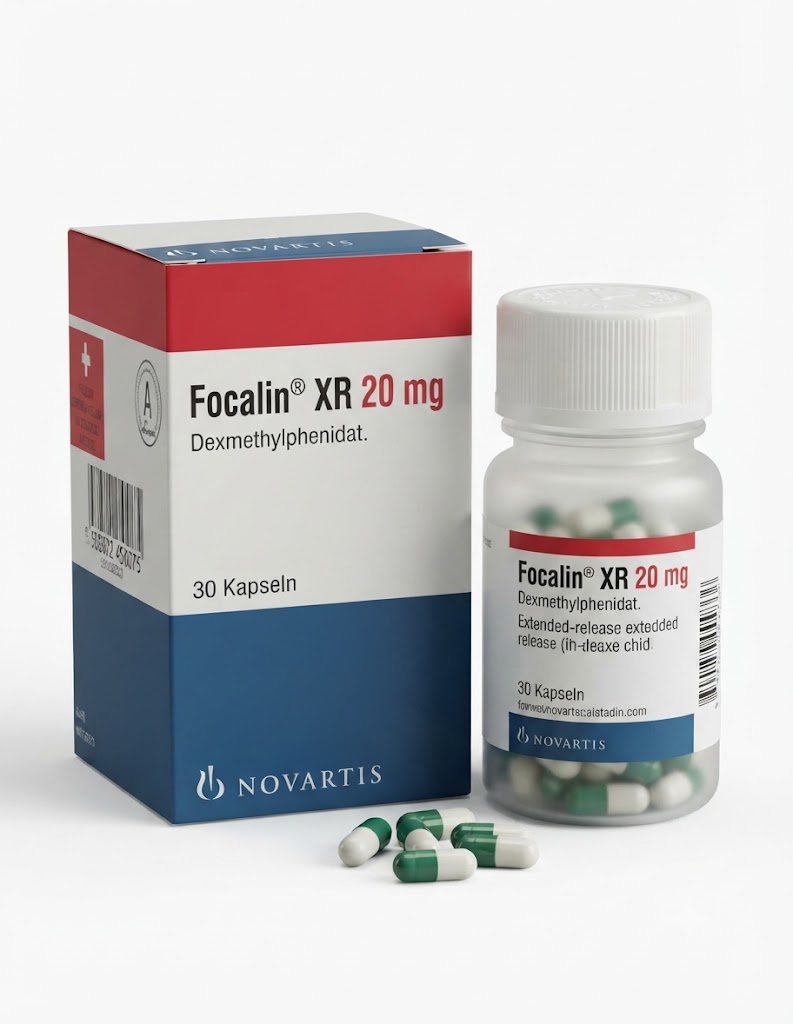
Focalin XR: Uses, Dosage, Side Effects, and Safety Guide
Focalin XR is a once-daily, extended-release stimulant medication built around dexmethylphenidate, the more pharmacologically active half of the methylphenidate molecule. Its bi-modal release profile provides roughly 12 hours of symptom coverage from a single morning dose. Because it falls under Schedule II as a controlled substance, it requires careful prescribing, monitoring, and safe storage.
The information below reflects the current FDA prescribing information for Focalin XR. However, this guide serves general education purposes only and does not replace advice from a licensed prescriber or pharmacist.
Product Overview
What Is Focalin XR?
Focalin XR is a central nervous system (CNS) stimulant. Specifically, it contains dexmethylphenidate hydrochloride inside a bead-filled capsule with a bi-modal release profile — half the beads release the drug immediately, while an enteric coating delays the other half by several hours. The FDA first approved it in 2005.
Because Focalin XR isolates the more active d-isomer of methylphenidate, its effective doses run lower than standard racemic methylphenidate extended-release products.
Active Ingredient
The active ingredient is dexmethylphenidate hydrochloride, the single, more pharmacologically active d-enantiomer of methylphenidate.
Brand Name and Generic Name
The brand name is Focalin XR, and Novartis Pharmaceuticals Corporation manufactures it. The generic name is dexmethylphenidate hydrochloride extended-release capsules, and generic manufacturers also offer versions.
Drug Classification
Focalin XR belongs to the piperidine class of CNS stimulants. Consequently, the DEA classifies it as a Schedule II controlled substance.
FDA-Approved Uses
The FDA approves Focalin XR for one condition, across a broad age range:
- Attention deficit hyperactivity disorder (ADHD) in patients 6 years of age and older, including both pediatric patients and adults.
That said, the label does not recommend Focalin XR in children younger than 6, and researchers have not studied it in the geriatric population.
Evidence-Supported Off-Label Uses
Some clinicians prescribe extended-release dexmethylphenidate off-label for conditions such as treatment-resistant depression (as an add-on strategy), certain sleep disorders involving excessive daytime sleepiness, or fatigue associated with specific medical conditions. These uses fall outside Focalin XR’s FDA-approved indication, though, so patients should only pursue them with close specialist oversight.
How It Works
Dexmethylphenidate blocks the reuptake of norepinephrine and dopamine into the presynaptic neuron, increasing their availability in the brain. Even so, researchers have not fully defined the exact mechanism behind its benefit in ADHD, though they believe this increased signaling improves attention and impulse control.
Product Information Table
| Attribute | Detail |
|---|---|
| Brand | Focalin XR |
| Generic | Dexmethylphenidate hydrochloride extended-release |
| Active Ingredient | Dexmethylphenidate hydrochloride |
| Drug Class | CNS stimulant (piperidine derivative) |
| Manufacturer | Novartis Pharmaceuticals Corporation; generic manufacturers also available |
| Prescription Status | Prescription only |
| Controlled Drug Schedule | Schedule II (CII) |
| Dosage Forms | Extended-release capsule (bi-modal release) |
| Strengths | 5 mg, 10 mg, 15 mg, 20 mg, 25 mg, 30 mg, 35 mg, 40 mg |
| Administration Route | Oral |
| Onset (first peak) | Approximately 1.5 hours (typical range 1–4 hours) |
| Duration of Effect | Approximately 8–12 hours from a single morning dose |
| Half-Life | Approximately 3 hours (adults); slightly shorter (2–3 hours) in children |
| Storage | Room temperature, 68–77°F (20–25°C) |
Available Strengths
Each capsule strength carries a distinct color combination and imprint to help confirm the correct dose.
| Strength | Dosage Form | Color | Imprint |
|---|---|---|---|
| 5 mg | Extended-release capsule | Light blue cap and body | NVR / D5 |
| 10 mg | Extended-release capsule | Light caramel cap and body | NVR / D10 |
| 15 mg | Extended-release capsule | Green cap and body | NVR / D15 |
| 20 mg | Extended-release capsule | White cap and body | NVR / D20 |
| 25 mg | Extended-release capsule | Light blue cap, white body | NVR / D25 |
| 30 mg | Extended-release capsule | Light caramel cap, white body | NVR / D30 |
| 35 mg | Extended-release capsule | Light blue cap, light caramel body | NVR / D35 |
| 40 mg | Extended-release capsule | Green cap, white body | NVR / D40 |
If a capsule looks different from what a patient normally receives, they should confirm with their pharmacist before taking it.
Dosage Guide
Dosing always depends on age, prior methylphenidate use, and individual response, so a prescriber determines the exact starting dose and any adjustments.
Children (6 Years and Older)
For pediatric patients new to methylphenidate, the recommended starting dose is 5 mg once daily in the morning. From there, the prescriber may increase the dose in 5 mg increments at approximately weekly intervals, up to a maximum of 30 mg per day.
Adults
Similarly, for adults new to methylphenidate, the recommended starting dose is 10 mg once daily in the morning. Again, the prescriber may increase the dose in 10 mg increments at approximately weekly intervals, up to a maximum of 40 mg per day.
Patients Switching From Other Methylphenidate Products
Patients currently taking racemic methylphenidate can typically start Focalin XR at half their current total daily methylphenidate dose. Meanwhile, patients already taking immediate-release Focalin tablets may receive the same total daily dose of Focalin XR.
Older Adults
Researchers have not studied Focalin XR in the geriatric population, so prescribing in older adults involves added caution and individualized clinical judgment.
Kidney Disease
No experience exists using Focalin XR in patients with kidney disease. However, since renal clearance is not a major route of methylphenidate elimination, researchers expect kidney impairment to have relatively little effect on how the body clears the drug.
Liver Disease
Likewise, no experience exists using Focalin XR in patients with liver disease. Because of this, patients should inform their prescriber of any significant liver condition before starting treatment so the prescriber can monitor accordingly.
How to Take It
Before Meals
Focalin XR does not require a strict before-meals schedule. Instead, patients take it once daily in the morning, generally with or without food, though timing relative to meals may need to be individualized based on response.
After Meals
As above, timing relative to meals stays flexible for Focalin XR. Still, consistency in daily timing may help maintain predictable symptom coverage.
Missed Dose
If a patient misses a morning dose, they should generally avoid taking it later in the day, since doing so raises the risk of insomnia. Instead, patients should skip the missed dose and resume their normal schedule the next morning unless their prescriber advises otherwise.
Overdose
Methylphenidate overdose can cause dangerously elevated heart rate and blood pressure, agitation, hallucinations, seizures, or dangerously high body temperature. Because of this risk, anyone who suspects an overdose should call Poison Control at 1-800-222-1222 or seek emergency medical care immediately.
Storage and Disposal
Patients should store Focalin XR in a secure, ideally locked, tightly closed container at room temperature. For disposal, a DEA-authorized take-back program works best; alternatively, patients can mix unused capsules with an undesirable substance such as coffee grounds, seal them, and discard them in household trash.
Benefits
For patients with diagnosed ADHD, Focalin XR offers once-daily dosing that avoids the need for a midday dose, while using lower milligram amounts than standard racemic methylphenidate extended-release products because it contains only the more active isomer. In clinical trials, both pediatric patients and adults showed statistically significant improvement in ADHD symptom ratings compared with placebo, and some studies observed effects as early as the first hour after dosing.
Side Effects
Because stimulant medications affect multiple body systems, side effects range from mild to serious.
Common Side Effects
- Decreased appetite
- Headache
- Dyspepsia (indigestion)
- Anxiety
- Dry mouth (more common in adults)
- Pharyngolaryngeal pain (more common in adults)
Less Common Side Effects
- Feeling jittery
- Dizziness
- Insomnia
- Nausea or vomiting
- Irritability
Serious Side Effects
- New or worsening mental health symptoms, including mania or psychosis
- Slowed growth in children
- Circulation problems in fingers or toes (Raynaud’s phenomenon)
- Priapism (painful, prolonged erection)
- Increased eye pressure or vision changes
- New or worsening tics
Emergency Symptoms
Patients should seek emergency care immediately for:
- Chest pain, shortness of breath, or fainting
- A prolonged, painful erection lasting several hours
- Sudden eye pain, swelling, or vision loss
- Signs of a severe allergic reaction, such as facial or throat swelling
Drug Interactions
Because dexmethylphenidate affects the heart and nervous system, it interacts with several other substances.
Prescription Drugs
Doctors contraindicate combining Focalin XR with monoamine oxidase inhibitors (MAOIs) due to the risk of hypertensive crisis. In addition, Focalin XR may reduce the effectiveness of blood pressure medications, and combining it with risperidone may raise the risk of movement-related side effects.
OTC Medicines
The current FDA label does not specifically flag any major over-the-counter interactions. Still, patients should check with a pharmacist before combining Focalin XR with any OTC decongestant or stimulant-containing product.
Alcohol
The current label doesn’t detail a specific dose-release interaction between alcohol and Focalin XR the way some other extended-release stimulant capsules do. That said, alcohol can still add cardiovascular strain when combined with any stimulant, so prescribers use Focalin XR cautiously in patients with a history of drug dependence or alcoholism.
Supplements
The current label does not highlight any specific supplement interactions. Even so, patients should always disclose supplement use to their prescriber.
Herbal Products
Patients should disclose all herbal product use to their prescriber, since limited formal interaction data exists for many herbal supplements and stimulant medications.
Foods
No dedicated food-effect study has covered Focalin XR itself, but studies of a similarly designed racemic methylphenidate extended-release product found no meaningful difference in effect with or without food, and researchers consider those findings applicable here as well.
Warnings
Focalin XR carries an FDA boxed warning, the agency’s strongest safety warning, for abuse, misuse, and addiction. Specifically, misuse — including taking higher doses, using it without a prescription, or altering the route of administration — increases the risk of overdose and death.
The medication also carries warnings for sudden death in patients with underlying heart conditions, increased blood pressure and heart rate, new psychiatric symptoms, priapism, and eye-related risks including acute angle closure glaucoma and increased intraocular pressure.
Contraindications
Patients should not use Focalin XR if they:
- Have a known hypersensitivity to methylphenidate or other components of Focalin XR
- Are taking, or have taken within the past 14 days, a monoamine oxidase inhibitor (MAOI)
Pregnancy
Available published studies and postmarketing reports have not identified a drug-associated risk of major birth defects or miscarriage with methylphenidate use during pregnancy. However, stimulants can cause vasoconstriction, which may reduce blood flow to the placenta. To track outcomes, a pregnancy exposure registry follows patients exposed to ADHD medications, including Focalin XR, during pregnancy. Anyone who is pregnant or planning pregnancy should discuss the risks and benefits with their prescriber.
Breastfeeding
Limited data show that methylphenidate passes into breast milk in small amounts. So far, researchers have not reported adverse effects on breastfed infants, but a prescriber should weigh the benefits of breastfeeding against the mother’s clinical need for treatment and monitor the infant for agitation, poor sleep, or reduced feeding.
Monitoring Requirements
Prescribers typically monitor the following throughout treatment:
- Blood pressure and heart rate at each visit
- Height and weight, checked often in pediatric patients
- Signs of new or worsening psychiatric symptoms
- Eye symptoms, particularly in patients at risk for glaucoma
- Signs of misuse, dependence, or diversion
Storage Instructions
Patients should keep Focalin XR at room temperature, between 68°F and 77°F (20°C to 25°C), in a tightly closed container. Beyond that, they should store it in a secure, ideally locked, location and never share it with anyone else, since doing so is both dangerous and illegal.
Frequently Asked Questions
What is Focalin XR used for?
The FDA approves Focalin XR to treat attention deficit hyperactivity disorder (ADHD) in patients 6 years of age and older, including both children and adults. Ultimately, a healthcare provider determines whether it’s an appropriate treatment based on a full diagnostic evaluation and cardiac screening before prescribing.
How is Focalin XR different from Focalin?
Focalin XR is an extended-release capsule taken once daily in the morning, while regular Focalin is an immediate-release tablet usually taken twice a day, at least 4 hours apart. Focalin XR uses a bi-modal bead system to provide roughly 12 hours of coverage from a single dose, and unlike the immediate-release version, it comes with a formal, FDA-established adult dosing regimen.
What is the typical starting dose of Focalin XR?
For children 6 and older who are new to methylphenidate, the typical starting dose is 5 mg once daily, with a maximum of 30 mg per day. For adults, meanwhile, the typical starting dose is 10 mg once daily, with a maximum of 40 mg per day. From there, a prescriber increases the dose gradually based on response and tolerability.
Can adults take Focalin XR?
Yes. Unlike the immediate-release Focalin tablet, Focalin XR carries a formal FDA-established dosing regimen for adults, starting at 10 mg once daily up to a maximum of 40 mg per day. That said, researchers have not studied it in adults over the geriatric threshold, so prescribing in that population involves extra caution.
How long does Focalin XR last?
Focalin XR provides roughly 8 to 12 hours of symptom coverage from a single morning dose. Along the way, its bi-modal release profile produces two absorption peaks — an initial one around 1.5 hours after the dose and a second one around 6.5 hours after — which helps sustain coverage through the day.
Can I take Focalin XR with food?
Yes, patients can generally take Focalin XR with or without food. Researchers haven’t conducted a dedicated food-effect study specifically for Focalin XR, but related extended-release methylphenidate research found no meaningful difference in effect with or without food, and they consider this applicable to Focalin XR as well.
What happens if I miss a dose?
If patients miss a morning dose, they should generally avoid taking it later in the day, since this raises the risk of insomnia. Instead, they should skip the missed dose, resume their normal schedule the next day, and contact their prescriber if missed doses become frequent.
Is Focalin XR the same as Focalin, just longer-lasting?
They contain the same active ingredient, dexmethylphenidate, but they’re not simply the same product stretched out. Instead, Focalin XR uses a bead-based delivery system that releases half the dose immediately and half several hours later, which changes both how often patients take it and, in adults, how the dosing is formally established compared with the immediate-release tablet.
What are the most common side effects of Focalin XR?
In children, the most common side effects include dyspepsia, decreased appetite, headache, and anxiety. In adults, by contrast, the most common side effects include dry mouth, dyspepsia, headache, pharyngolaryngeal pain, and anxiety. Overall, most side effects stay mild to moderate, but patients should report anything severe or persistent to their prescriber.
Is Focalin XR addictive?
Yes. Focalin XR carries an FDA boxed warning for abuse, misuse, and addiction because it is a Schedule II controlled substance. Even when taken exactly as prescribed, long-term use can lead to physical dependence. For this reason, patients should never share their medication, and prescribers routinely reassess abuse risk throughout treatment.
Can Focalin XR cause eye problems?
Yes, in some patients. Focalin XR has links to increased eye pressure and, in rare cases, acute angle closure glaucoma, particularly in patients with farsightedness or other risk factors. So, anyone who develops eye pain, redness, swelling, or vision changes while taking Focalin XR should contact a healthcare provider immediately.
Is Focalin XR safe during pregnancy?
Published data on methylphenidate use during pregnancy have not identified a clear risk of major birth defects, but stimulants can reduce blood flow to the placenta. To track outcomes, a pregnancy exposure registry follows people exposed to ADHD medications, including Focalin XR, during pregnancy. Anyone who is pregnant or planning pregnancy should talk with their prescriber before continuing or starting treatment.
Can Focalin XR interact with blood pressure medicine?
Yes. Focalin XR may reduce the effectiveness of medications used to treat high blood pressure. Because of this, prescribers typically monitor blood pressure closely and may adjust the antihypertensive dosage as needed. Patients taking blood pressure medication should make sure their prescriber knows before starting Focalin XR.
What should I do if I think I’ve taken too much Focalin XR?
Suspected overdose is a medical emergency. Symptoms can include a rapid heartbeat, dangerously high body temperature, severe agitation, hallucinations, or seizures. Given the risks, patients should call Poison Control at 1-800-222-1222 or go to the nearest emergency room immediately rather than waiting to see if symptoms improve.
Conclusion
Focalin XR combines the lower-dose advantage of isolated dexmethylphenidate with once-daily, extended-release convenience, and it covers a broader age range than the immediate-release Focalin tablet, including a formally established adult dosing regimen. Its bi-modal delivery system provides roughly 8 to 12 hours of coverage from a single morning dose, while carrying the same class-wide warnings around cardiovascular risk, psychiatric symptoms, eye pressure, and abuse potential that other methylphenidate products share. Ultimately, patients and caregivers who understand the dosing guidelines, potential side effects, and safety warnings covered in this guide will be better equipped to use Focalin XR safely and to recognize when to seek medical help.
| Pills | 60, 90, 100, 150, 200 |
|---|
Be the first to review “Focalin XR”
Related products
ADHD
ADHD
ADHD
ADHD
ADHD
ADHD
ADHD
Reviews
There are no reviews yet.