

Dexedrine: Uses, Dosage, Side Effects, and Safety Guide
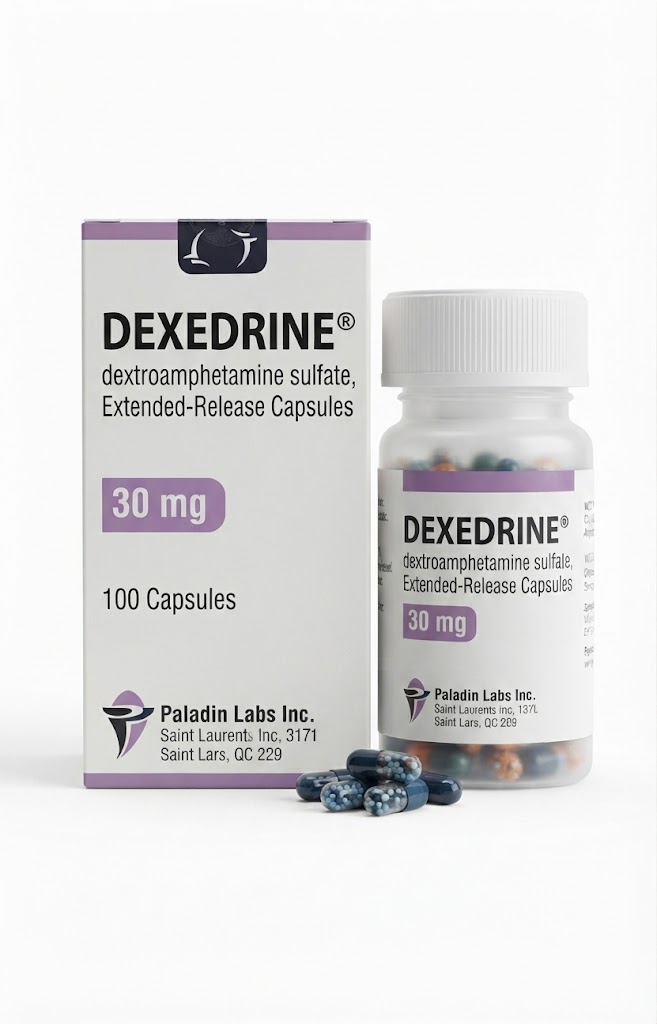
Dexedrine is the original brand name for dextroamphetamine sulfate, an amphetamine-class stimulant used for attention deficit hyperactivity disorder (ADHD) and narcolepsy. Manufacturers have since discontinued the immediate-release Dexedrine tablet brand in the U.S., though the same active ingredient remains available as generic dextroamphetamine sulfate tablets and under the newer brand name Zenzedi. Because it falls under Schedule II as a controlled substance, it requires careful prescribing, monitoring, and safe storage.
The information below draws on FDA prescribing information for immediate-release dextroamphetamine sulfate tablets. However, this guide serves general education purposes only and does not replace advice from a licensed prescriber or pharmacist.
Product Overview
What Is Dexedrine?
Dexedrine tablets contained dextroamphetamine sulfate, the dextro isomer of amphetamine, in an immediate-release tablet. Manufacturers first introduced it under the Dexedrine name in 1937, making it one of the oldest stimulant medications used in psychiatry and neurology. They have since discontinued the brand name, but doctors still prescribe the same drug today as generic dextroamphetamine sulfate or under the brand name Zenzedi.
Active Ingredient
The active ingredient is dextroamphetamine sulfate, the dextro-isomer of d,l-amphetamine sulfate.
Brand Name and Generic Name
The historical brand name was Dexedrine, originally introduced by Smith, Kline & French. The generic name is dextroamphetamine sulfate. Today, patients can find the immediate-release version generically and under the brand name Zenzedi.
Drug Classification
Dextroamphetamine belongs to the amphetamine class of CNS stimulants. Consequently, the DEA classifies it as a Schedule II controlled substance.
FDA-Approved Uses
The FDA indicates dextroamphetamine sulfate immediate-release tablets for:
- Narcolepsy, in both adults and children.
- Attention deficit hyperactivity disorder (ADHD), as part of a total treatment program, in pediatric patients.
That said, the label does not recommend it in children younger than 6.
Evidence-Supported Off-Label Uses
Some clinicians use dextroamphetamine off-label to manage treatment-resistant depression as an augmentation strategy, or for certain conditions involving excessive fatigue, under specialist supervision. However, these uses fall outside the FDA-approved indication, so patients should only pursue them with close medical monitoring.
How It Works
Amphetamines increase the release of norepinephrine and dopamine and block their reuptake into the presynaptic neuron. Even so, researchers have not fully established the exact mechanism behind the clinical benefit in ADHD and narcolepsy.
Product Information Table
| Attribute | Detail |
|---|---|
| Historical Brand | Dexedrine (discontinued); currently available as Zenzedi or generic |
| Generic | Dextroamphetamine sulfate |
| Active Ingredient | Dextroamphetamine sulfate |
| Drug Class | CNS stimulant (amphetamine) |
| Manufacturer | Originally Smith, Kline & French / Abbott Laboratories; today, various generic manufacturers and Zenzedi’s manufacturer |
| Prescription Status | Prescription only |
| Controlled Drug Schedule | Schedule II (CII) |
| Dosage Forms | Immediate-release tablet |
| Historical Strengths | 5 mg, 10 mg (Dexedrine); current Zenzedi strengths run 2.5–30 mg |
| Administration Route | Oral |
| Onset of Action | Peak levels around 3 hours after a dose |
| Duration of Effect | Approximately 4–6 hours per dose |
| Half-Life | Approximately 12 hours |
| Storage | Room temperature, historically 59–86°F (15–30°C); protect from light |
Available Strengths
Historically, Dexedrine tablets were triangular, orange, scored, and debossed, available in 5 mg and 10 mg strengths. Current immediate-release dextroamphetamine sulfate products (generic and Zenzedi) come in a range of strengths and appearances depending on manufacturer, so patients should always check the specific product their pharmacy dispenses rather than relying on the historical Dexedrine appearance.
| Strength | Dosage Form | Historical Dexedrine Appearance |
|---|---|---|
| 5 mg | Immediate-release tablet | Orange, triangular, scored, debossed “SKF” and “E19” |
| 10 mg | Immediate-release tablet | Historically available; specific imprint varied by manufacturing era |
Dosage Guide
Dosing always depends on age, the condition under treatment, and individual response, so a prescriber determines the exact starting dose and any adjustments.
Children (ADHD)
For ADHD, treatment typically starts at 5 mg once or twice daily, and the prescriber may increase the dose in 5 mg increments at weekly intervals. Patients rarely need to exceed a total of 40 mg per day. Also, prescribers do not recommend this medication for children younger than 6.
Adults and Children (Narcolepsy)
For narcolepsy, meanwhile, the usual dose is 5 mg to 60 mg per day in divided doses, depending on individual response. Narcolepsy is uncommon in children under 12, but when present, dosing typically starts at 5 mg daily for ages 6 to 12, or 10 mg daily for ages 12 and older, with the prescriber increasing the dose in 5–10 mg increments at weekly intervals.
Older Adults
The historical label for this medication does not include a dedicated geriatric dosing section. As with all stimulants, though, prescribers typically use added caution and start with the lowest effective dose in older adults.
Kidney Disease
The historical label does not include specific dosing guidance for kidney impairment. Still, the kidneys partly clear amphetamines, so a prescriber may consider dose adjustments and closer monitoring in patients with significant kidney disease.
Liver Disease
Likewise, the historical label does not include specific dosing guidance for liver impairment. Because of this, patients should inform their prescriber of any significant liver condition before starting treatment.
How to Take It
Before Meals
Patients can generally take dextroamphetamine immediate-release tablets with or without food, taking the first dose on awakening.
After Meals
As above, timing relative to meals stays flexible. Consistency in daily timing may help maintain predictable symptom coverage.
Missed Dose
If patients miss a dose, they should generally take it as soon as they remember, unless it’s close to the next scheduled dose or would fall too late in the day, which could disrupt sleep. Patients should never double up doses, and they should avoid late evening doses due to the risk of insomnia.
Overdose
Amphetamine overdose can cause dangerously high blood pressure, rapid heartbeat, high body temperature, agitation, hallucinations, or seizures. Because of this risk, anyone who suspects an overdose should call Poison Control at 1-800-222-1222 or go to the nearest emergency room immediately.
Storage and Disposal
Patients should store dextroamphetamine sulfate tablets in a secure, ideally locked, location, protected from light. For disposal, a DEA-authorized take-back program works best; alternatively, patients can mix unused tablets with an undesirable substance such as coffee grounds, seal them, and discard them in household trash.
Benefits
For patients with diagnosed ADHD or narcolepsy, immediate-release dextroamphetamine offers a fast-acting, well-established treatment option with decades of clinical use behind it. Because it’s short-acting, prescribers can fine-tune doses throughout the day, and it remains one of the lower-cost options in the stimulant class as a widely available generic.
Side Effects
Because stimulant medications affect multiple body systems, side effects range from mild to serious.
Common Side Effects
- Fast heartbeat
- Decreased appetite
- Tremors
- Headache
- Trouble sleeping
- Dizziness
- Stomach upset
- Weight loss
- Dry mouth
Less Common Side Effects
- Unpleasant taste
- Diarrhea or constipation
- Changes in libido
- Restlessness or overstimulation
- Alopecia (hair thinning)
Serious Side Effects
- New or worsening mental health symptoms, including mania or psychosis
- Slowed growth in children
- Circulation problems in fingers or toes (Raynaud’s phenomenon)
- Seizures
- New or worsening tics
- Serotonin syndrome (when combined with certain other medications)
- Prolonged, painful erections (priapism)
Emergency Symptoms
Patients should seek emergency care immediately for:
- Chest pain, shortness of breath, or fainting
- Signs of serotonin syndrome, such as agitation, high fever, tremor, or confusion
- A seizure
- Signs of a severe allergic reaction, such as facial or throat swelling
Drug Interactions
Dextroamphetamine has one of the more extensive documented interaction profiles among stimulants.
Prescription Drugs
Doctors contraindicate combining dextroamphetamine with monoamine oxidase inhibitors (MAOIs) due to the risk of hypertensive crisis. In addition, serotonergic medications (SSRIs, SNRIs, triptans, tricyclic antidepressants, and others) raise the risk of serotonin syndrome. Tricyclic antidepressants can also cause a striking, sustained increase in brain amphetamine concentrations, while CYP2D6 inhibitors like paroxetine and fluoxetine can increase dextroamphetamine exposure.
OTC Medicines
Alkalinizing agents like sodium bicarbonate increase amphetamine blood levels, so patients should generally avoid combining them. Acidifying agents, including high-dose vitamin C, can lower amphetamine blood levels instead.
Alcohol
The label does not detail a specific interaction between alcohol and this formulation, but alcohol can add cardiovascular strain when combined with any stimulant. Because of this, patients should disclose alcohol use to their prescriber.
Supplements
St. John’s Wort raises the risk of serotonin syndrome when combined with dextroamphetamine. For this reason, patients should disclose all supplement use to their prescriber.
Herbal Products
As with St. John’s Wort above, patients should discuss herbal products with serotonergic or stimulant-like activity with a prescriber before combining them with dextroamphetamine.
Foods
No major food restriction applies, though acidic foods and juices can modestly reduce amphetamine absorption through the same mechanism as acidifying medications.
Warnings
Dextroamphetamine carries an FDA boxed warning for abuse, misuse, and addiction. Specifically, misuse — including taking higher doses, using it without a prescription, or altering the route of administration — increases the risk of overdose and death.
In addition, the medication carries warnings for sudden death in patients with underlying heart conditions, increased blood pressure and heart rate, new psychiatric symptoms, seizures, serotonin syndrome, and long-term growth suppression in children.
Contraindications
Patients should not use dextroamphetamine sulfate tablets if they:
- Have a known hypersensitivity to amphetamine or other components of the product
- Are taking, or have taken within the past 14 days, a monoamine oxidase inhibitor (MAOI)
Pregnancy
This medication’s historical labeling uses the older Pregnancy Category C system and predates newer FDA pregnancy-labeling formats. Animal studies showed embryotoxic and teratogenic effects at high doses in mice, though not in rabbits or rats at lower multiples of the human dose. There is also a single published case report of severe congenital abnormalities in an infant born to a mother who took dextroamphetamine together with lovastatin during the first trimester; researchers did not establish a causal link. Given this uncertainty, pregnant patients should use this medication only if the potential benefit justifies the potential risk to the fetus, and infants born to mothers dependent on amphetamines face an increased risk of premature delivery and low birth weight.
Breastfeeding
Amphetamines pass into human milk. Because of this, the historical labeling for this medication advises against breastfeeding during treatment.
Monitoring Requirements
Prescribers typically monitor the following throughout treatment:
- Blood pressure and heart rate at each visit
- Height and weight, checked often in pediatric patients
- Signs of new or worsening psychiatric symptoms
- Signs of misuse, dependence, or diversion
- Family and personal history of tics or Tourette’s syndrome before starting
Storage Instructions
Historical Dexedrine labeling specified storage between 59°F and 86°F (15°C to 30°C), protected from light, in a tightly closed container. Current dextroamphetamine sulfate products may specify a narrower room-temperature range, so patients should always follow the storage instructions on the specific product dispensed. Beyond that, they should store it in a secure, ideally locked, location and never share it with anyone else, since doing so is both dangerous and illegal.
Frequently Asked Questions
What is Dexedrine used for?
Doctors use Dexedrine (dextroamphetamine sulfate) to treat narcolepsy and, in pediatric patients, attention deficit hyperactivity disorder (ADHD) as part of a broader treatment program. Ultimately, a healthcare provider determines whether it’s an appropriate treatment based on a full diagnostic evaluation and cardiac screening before prescribing.
Is Dexedrine still available?
Manufacturers have discontinued the specific brand-name “Dexedrine” immediate-release tablet in the U.S. However, the same active ingredient, dextroamphetamine sulfate, remains available as a generic and under the newer brand name Zenzedi. Dexedrine Spansule, the extended-release capsule version, is a separate product that manufacturers still actively produce.
What is the typical starting dose of Dexedrine tablets?
For ADHD, treatment typically starts at 5 mg once or twice daily, and the prescriber increases the dose in 5 mg increments at weekly intervals, rarely exceeding 40 mg per day. For narcolepsy, meanwhile, dosing ranges more broadly from 5 mg to 60 mg per day in divided doses, depending on individual response. A prescriber determines the right starting point.
How is Dexedrine different from Dexedrine Spansule?
Dexedrine tablets were immediate-release, and patients typically took them multiple times a day, 4 to 6 hours apart. Dexedrine Spansule, by contrast, is an extended-release capsule, often usable as a single daily dose, that releases part of the dose immediately and the rest gradually over a longer period. Even so, they contain the same active ingredient.
How long does a dose of Dexedrine last?
A single dose of immediate-release dextroamphetamine generally lasts about 4 to 6 hours, which is why patients typically need multiple daily doses spaced several hours apart to maintain symptom control throughout the day.
Can Dexedrine be taken with food?
Yes, patients can generally take immediate-release dextroamphetamine with or without food. Typically, they take the first dose upon waking, spacing additional doses 4 to 6 hours apart as needed.
What happens if a dose is missed?
If patients miss a dose, they should generally take it as soon as they remember, unless doing so would push it too late in the day or too close to the next scheduled dose. Patients should never double up doses, and they should avoid late doses to prevent sleep disruption.
Is Dexedrine safe for adults?
The FDA approves dextroamphetamine for narcolepsy in adults. Its ADHD indication in the historical Dexedrine labeling, however, is specific to pediatric patients, though other dextroamphetamine-based products, such as Adderall or Adderall XR, do carry an adult ADHD indication. Ultimately, a prescriber decides which product and formulation fits an individual patient’s needs.
What are the most common side effects?
Patients most frequently report fast heartbeat, decreased appetite, tremors, headache, trouble sleeping, dizziness, stomach upset, weight loss, and dry mouth. Overall, most side effects stay mild, but patients should report anything severe or persistent to a prescriber.
Is Dexedrine addictive?
Yes. Dextroamphetamine carries an FDA boxed warning for abuse, misuse, and addiction because it is a Schedule II controlled substance. Even when taken exactly as prescribed, long-term use can lead to physical dependence. For this reason, patients should never share their medication, and prescribers routinely reassess abuse risk throughout treatment.
Can Dexedrine cause serotonin syndrome?
Yes. Combining dextroamphetamine with serotonergic medications, such as SSRIs, SNRIs, triptans, tricyclic antidepressants, or St. John’s Wort, raises the risk of serotonin syndrome, a potentially life-threatening reaction. Because of this, patients should tell their prescriber about every medication and supplement they take before starting treatment.
Is Dexedrine the same as Adderall?
Not exactly. Dexedrine contains only dextroamphetamine, while Adderall contains a mixture of amphetamine salts, including both dextroamphetamine and levoamphetamine. Both are amphetamine-class stimulants used for ADHD, but their exact composition and side-effect profiles can differ somewhat between patients.
Is Dexedrine safe during pregnancy?
This medication’s labeling advises using it during pregnancy only if the potential benefit justifies the potential risk to the fetus, based on older animal studies and a single case report involving combined use with another medication. Given this, anyone who is pregnant or planning pregnancy should talk with their prescriber before continuing or starting treatment.
What should I know about the tartrazine (Yellow No. 5) in Dexedrine tablets?
Historical Dexedrine tablets contained FD&C Yellow No. 5 (tartrazine), a dye that can cause allergic-type reactions, including bronchial asthma, in certain susceptible individuals. Clinicians see this sensitivity more frequently in people who also have aspirin sensitivity. For that reason, patients with a known tartrazine sensitivity should check the inactive ingredients of whatever specific dextroamphetamine product they receive today.
What should I do if I took too much Dexedrine?
Suspected overdose is a medical emergency. Symptoms can include a rapid heartbeat, dangerously high body temperature, severe agitation, hallucinations, or seizures. Given the risks, patients should call Poison Control at 1-800-222-1222 or go to the nearest emergency room immediately rather than waiting to see if symptoms improve.
Conclusion
Dexedrine’s legacy as one of the earliest stimulant medications for ADHD and narcolepsy lives on today through generic dextroamphetamine sulfate tablets and the newer Zenzedi brand, even though manufacturers discontinued the original Dexedrine tablet brand itself. Its short duration of action means patients typically need multiple daily doses, and it carries the same class-wide warnings around cardiovascular risk, psychiatric symptoms, serotonin syndrome, and abuse potential that other amphetamine products share. Ultimately, patients and caregivers who understand the dosing guidelines, potential side effects, and safety warnings covered in this guide will be better equipped to use dextroamphetamine safely and to recognize when to seek medical help.
| Pills | 30, 60, 100, 150, 200 |
|---|
Be the first to review “Dexedrine”
Related products
ADHD
ADHD
ADHD
ADHD
ADHD
ADHD
ADHD
Reviews
There are no reviews yet.