Ritalin: Uses, Dosage, Side Effects, and Safety Guide
Ritalin is a short-acting stimulant medication prescribed for attention deficit hyperactivity disorder (ADHD) and narcolepsy. Unlike once-daily extended-release stimulants, Ritalin is typically taken two to three times a day. Because it is a Schedule II controlled substance, it requires careful prescribing, monitoring, and safe storage.
The information below reflects current FDA prescribing information for Ritalin (methylphenidate hydrochloride tablets). It is intended for general education and does not replace advice from a licensed prescriber or pharmacist.
Product Overview
What Is Ritalin?
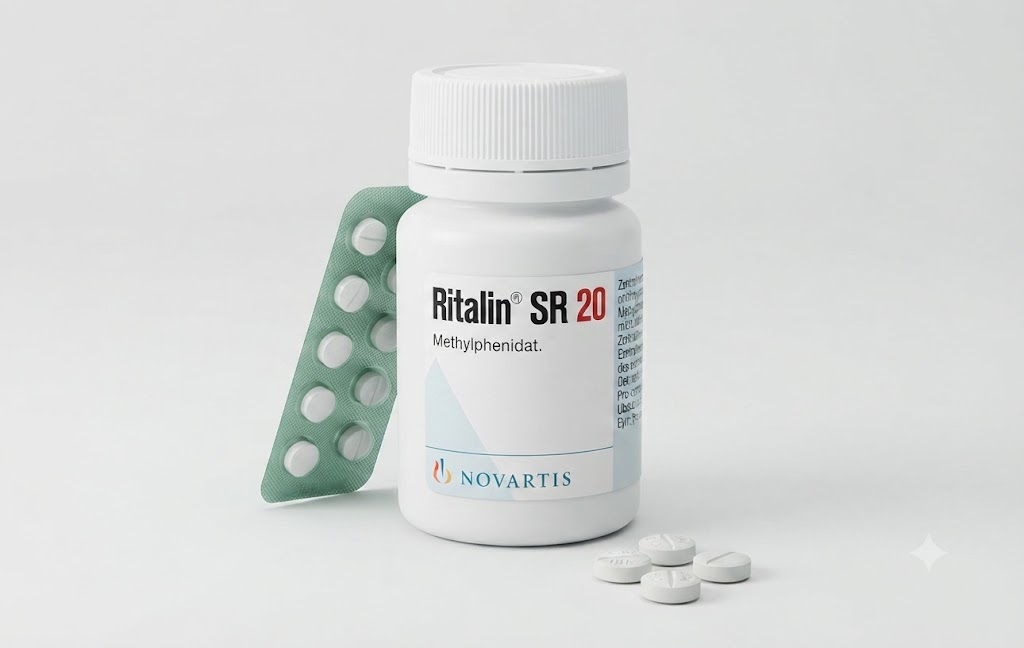
Ritalin is a central nervous system (CNS) stimulant. It contains methylphenidate hydrochloride in an immediate-release tablet. The FDA first approved it in 1955, making it one of the longest-used ADHD medications available.
Because it is immediate-release, its effects appear quickly but wear off faster than extended-release stimulants. As a result, most patients take it multiple times per day.
Active Ingredient
The active ingredient is methylphenidate hydrochloride, a racemic mixture of d- and l-threo enantiomers. The d-threo form is considered the more pharmacologically active component.
Brand Name and Generic Name
The brand name is Ritalin, manufactured by Novartis Pharmaceuticals Corporation. The generic name is methylphenidate hydrochloride, and generic versions are widely available.
Drug Classification
Ritalin belongs to the piperidine class of CNS stimulants. Consequently, the DEA classifies it as a Schedule II controlled substance, the same category as amphetamine-based stimulants.
FDA-Approved Uses
The FDA approves Ritalin for two conditions:
- Attention deficit hyperactivity disorder (ADHD) in adults and children 6 years of age and older.
- Narcolepsy, a chronic sleep disorder marked by excessive daytime sleepiness.
The label does not establish safety or effectiveness in children under 6 years old.
Evidence-Supported Off-Label Uses
Clinicians sometimes use methylphenidate off-label to manage fatigue or reduced concentration in certain medical conditions, such as cancer-related fatigue, under specialist supervision. However, these uses are not FDA-approved, and any off-label use should only occur with close medical monitoring.
How It Works
Methylphenidate blocks the reuptake of norepinephrine and dopamine into the presynaptic neuron, increasing their availability in the brain. Researchers have not fully defined the exact mechanism behind its benefit in ADHD or narcolepsy, though this increased signaling is thought to improve alertness, attention, and impulse control.
Product Information Table
| Attribute | Detail |
|---|---|
| Brand | Ritalin |
| Generic | Methylphenidate hydrochloride |
| Active Ingredient | Methylphenidate hydrochloride |
| Drug Class | CNS stimulant (piperidine derivative) |
| Manufacturer | Novartis Pharmaceuticals Corporation; multiple generic manufacturers |
| Prescription Status | Prescription only |
| Controlled Drug Schedule | Schedule II (CII) |
| Dosage Forms | Immediate-release tablet |
| Strengths | 5 mg, 10 mg, 20 mg |
| Administration Route | Oral |
| Onset of Action | Approximately 20–60 minutes |
| Duration of Effect | Approximately 3–5 hours per dose |
| Half-Life | Approximately 2–3 hours |
| Storage | Room temperature, 68–77°F (20–25°C); protect from light |
Available Strengths
Each tablet strength has a distinct color, shape, and imprint to help patients and pharmacists confirm the correct dose.
| Strength | Dosage Form | Color | Imprint |
|---|---|---|---|
| 5 mg | Immediate-release tablet, round, unscored | Yellow | CIBA 7 |
| 10 mg | Immediate-release tablet, round, scored | Pale green | CIBA 3 |
| 20 mg | Immediate-release tablet, round, scored | Pale yellow | CIBA 34 |
If a tablet looks different from what a patient normally receives, they should confirm with their pharmacist before taking it.
Dosage Guide
Dosing always depends on age, the condition being treated, and individual response. A prescriber determines the exact starting dose and any adjustments.
Adults
For ADHD, the average adult dosage is 20 mg to 30 mg per day, taken in divided doses two or three times daily, preferably 30 to 45 minutes before meals. For narcolepsy, dosing typically falls in a similar range. The maximum total daily dose is 60 mg.
Children
For children 6 years and older, treatment usually starts at 5 mg twice daily, taken before breakfast and lunch. A prescriber may increase the dose gradually in 5 mg to 10 mg increments at weekly intervals. Daily doses above 60 mg are not recommended.
Older Adults
Ritalin has not been studied specifically in adults over 65. Because of this, prescribers typically use added caution, starting with the lowest effective dose and monitoring closely for cardiovascular and psychiatric side effects.
Kidney Disease
Ritalin has not been formally studied in patients with kidney disease. However, less than 1% of a dose is excreted in urine unchanged, so kidney impairment is expected to have a minimal effect on how the body clears the drug. A prescriber may still choose to monitor more closely as a precaution.
Liver Disease
Ritalin has not been formally studied in patients with liver disease either. Because methylphenidate is broken down mainly by enzymes found throughout the body rather than primarily in the liver, hepatic impairment is expected to have a limited effect on clearance. Even so, a prescriber should be informed of any significant liver condition before starting treatment.
How to Take It
Before Meals
Ritalin is typically taken 30 to 45 minutes before meals. This timing helps align its onset of action with periods of the day when focus is most needed.
After Meals
Taking Ritalin after eating is not the standard approach, since it may blunt or delay its effect. Patients should follow their prescriber’s specific instructions on timing.
Missed Dose
If a dose is missed, patients should generally take it as soon as they remember, unless it is close to the next scheduled dose. Doses should never be doubled, and a late-day dose should be avoided if it risks causing insomnia.
Overdose
Methylphenidate overdose can cause dangerously elevated heart rate and blood pressure, agitation, hallucinations, seizures, or dangerously high body temperature. Anyone who suspects an overdose should call Poison Control at 1-800-222-1222 or seek emergency medical care immediately.
Storage and Disposal
Ritalin should be stored in a secure, ideally locked, location protected from light, and at room temperature. For disposal, a DEA-authorized take-back program is preferred; alternatively, mixing unused tablets with an undesirable substance such as coffee grounds before sealing and discarding them in household trash is an accepted method.
Benefits
For patients with diagnosed ADHD or narcolepsy, Ritalin can meaningfully improve daily functioning. It has one of the longest safety and efficacy track records of any stimulant medication, having been in clinical use since the 1950s. Because it acts quickly, prescribers can also fine-tune dosing more precisely than with some longer-acting alternatives.
Side Effects
Stimulant medications affect multiple body systems, so side effects range from mild to serious.
Common Side Effects
- Fast heartbeat or palpitations
- Headache
- Trouble sleeping
- Nervousness or anxiety
- Excessive sweating
- Decreased appetite
- Dry mouth
- Nausea or stomach pain
Less Common Side Effects
- Dizziness
- Tremor
- Drowsiness
- Reduced weight gain
- Mood changes
Serious Side Effects
- New or worsening mental health symptoms, including mania or psychosis
- Slowed growth in children
- Circulation problems in fingers or toes (Raynaud’s phenomenon)
- Priapism (painful, prolonged erection)
- Increased eye pressure or vision changes
- New or worsening tics
Emergency Symptoms
Patients should seek emergency care immediately for:
- Chest pain, shortness of breath, or fainting
- A prolonged, painful erection lasting several hours
- Sudden eye pain, swelling, or vision loss
- Signs of a severe allergic reaction, such as facial or throat swelling
Drug Interactions
Because methylphenidate affects the heart and nervous system, it interacts with several other substances.
Prescription Drugs
Combining Ritalin with monoamine oxidase inhibitors (MAOIs) is contraindicated due to the risk of hypertensive crisis. Additionally, Ritalin may reduce the effectiveness of blood pressure medications, and combining it with risperidone may raise the risk of movement-related side effects.
OTC Medicines
There are no major over-the-counter interactions specifically flagged in the FDA label. Still, patients should check with a pharmacist before combining Ritalin with any OTC decongestant or stimulant-containing product, since combined stimulant effects can add cardiovascular strain.
Alcohol
Alcohol can intensify cardiovascular strain when combined with a stimulant and may mask signs of impairment. Patients should discuss alcohol use with their prescriber.
Supplements
No specific supplement interactions are highlighted in the current FDA label for Ritalin. However, patients should always disclose supplement use to their prescriber, since individual responses can vary.
Herbal Products
Patients should disclose all herbal product use to their prescriber, since limited formal interaction data exists for many herbal supplements and stimulant medications.
Foods
Food does not meaningfully affect the absorption of Ritalin, but the label specifically recommends taking it 30 to 45 minutes before meals for optimal timing of effect.
Warnings
Ritalin carries an FDA boxed warning, the agency’s strongest safety warning, for abuse, misuse, and addiction. Misuse — including taking higher doses, using it without a prescription, or altering the route of administration — increases the risk of overdose and death.
The medication also carries warnings for sudden death in patients with underlying heart conditions, increased blood pressure and heart rate, new psychiatric symptoms, priapism, and eye-related risks including acute angle closure glaucoma and increased intraocular pressure.
Contraindications
Ritalin should not be used by patients who:
- Have a known hypersensitivity to methylphenidate or other components of Ritalin
- Are taking, or have taken within the past 14 days, a monoamine oxidase inhibitor (MAOI)
Additionally, the label recommends avoiding Ritalin on the day of surgery in patients receiving certain anesthetics, due to the risk of a sudden rise in blood pressure and heart rate.
Pregnancy
Available published studies and postmarketing reports have not identified a drug-associated risk of major birth defects or miscarriage with methylphenidate use during pregnancy. However, stimulants can cause vasoconstriction, which may reduce blood flow to the placenta. A pregnancy exposure registry exists to track outcomes for patients exposed to ADHD medications, including Ritalin, during pregnancy. Anyone who is pregnant or planning pregnancy should discuss the risks and benefits with their prescriber.
Breastfeeding
Limited data show that methylphenidate passes into breast milk in small amounts. No adverse effects on breastfed infants have been reported so far, but a prescriber should weigh the benefits of breastfeeding against the mother’s clinical need for treatment and monitor the infant for agitation, poor sleep, or reduced feeding.
Monitoring Requirements
Prescribers typically monitor the following throughout treatment:
- Blood pressure and heart rate at each visit
- Height and weight in pediatric patients
- Signs of new or worsening psychiatric symptoms
- Eye symptoms, particularly in patients at risk for glaucoma
- Signs of misuse, dependence, or diversion
Storage Instructions
Ritalin should be kept at room temperature, between 68°F and 77°F (20°C to 25°C), and protected from light in a tightly closed container. Patients should store it in a secure, ideally locked, location and never share it with anyone else, since doing so is both dangerous and illegal.
Frequently Asked Questions
What is Ritalin used for?
Ritalin is FDA-approved to treat attention deficit hyperactivity disorder (ADHD) in adults and children 6 years of age and older, as well as narcolepsy, a chronic sleep disorder involving excessive daytime sleepiness. It helps improve attention, focus, and wakefulness. A healthcare provider determines whether it’s an appropriate treatment based on a full diagnostic evaluation and cardiac screening before prescribing.
How is Ritalin different from Ritalin LA?
Ritalin is an immediate-release tablet usually taken two to three times a day, while Ritalin LA is an extended-release capsule taken once daily. Both contain the same active ingredient, methylphenidate. The choice between them typically depends on how long symptom coverage is needed and individual response, which a prescriber determines.
What is the typical Ritalin dosage for adults?
For adults with ADHD, the average dosage is 20 mg to 30 mg per day, split into two or three doses taken roughly 30 to 45 minutes before meals. The maximum recommended daily dose is 60 mg. A prescriber adjusts the dose gradually based on symptom control and tolerability, and patients should never change their own dose without guidance.
Can children take Ritalin?
Yes. The FDA has approved Ritalin for children 6 years of age and older with diagnosed ADHD. Treatment typically starts at 5 mg twice daily, with gradual increases as needed. It has not been established as safe and effective in children younger than 6, and growth should be monitored regularly during treatment.
How long does a dose of Ritalin last?
A single dose of immediate-release Ritalin generally lasts about 3 to 5 hours, with effects starting within 20 to 60 minutes. Because of this shorter duration, most patients take it multiple times throughout the day to maintain symptom control, unlike once-daily extended-release stimulants.
Should Ritalin be taken with food?
Ritalin is typically taken 30 to 45 minutes before meals rather than with food. This timing is meant to align the medication’s onset with mealtimes and daily activity. Patients should follow their prescriber’s specific instructions, since individual routines can vary.
What happens if a dose is missed?
If a dose is missed, it should generally be taken as soon as remembered, unless it’s close to the next scheduled dose, in which case it should be skipped. Doses should never be doubled up, and a missed dose should not be taken late in the day if it risks disrupting sleep.
Is Ritalin the same as Adderall?
No. Ritalin contains methylphenidate, while Adderall contains a mixture of amphetamine salts. Although both are Schedule II CNS stimulants used to treat ADHD, they work on the brain slightly differently and can produce different side effect profiles in individual patients. A prescriber decides which class is likely to work best for a given patient.
What are the most common side effects of Ritalin?
The most frequently reported side effects include fast heartbeat, headache, trouble sleeping, nervousness, excessive sweating, decreased appetite, dry mouth, and stomach pain. Most side effects are mild and may lessen over time, but patients should report anything severe or persistent, including eye symptoms or prolonged erections, to their prescriber right away.
Is Ritalin addictive?
Yes. Ritalin carries an FDA boxed warning for abuse, misuse, and addiction because it is a Schedule II controlled substance. Even when taken exactly as prescribed, long-term use can lead to physical dependence. Patients should never share their medication, and prescribers routinely reassess abuse risk throughout treatment.
Can Ritalin cause eye problems?
Yes, in some patients. Ritalin has been associated with increased eye pressure, and in rare cases, acute angle closure glaucoma, particularly in patients with farsightedness or other risk factors. Anyone who develops eye pain, redness, swelling, or vision changes while taking Ritalin should contact a healthcare provider immediately.
Can I drink alcohol while taking Ritalin?
Combining alcohol with Ritalin is generally discouraged. Alcohol can add cardiovascular strain when mixed with a stimulant and may mask signs of impairment from either substance. Patients should discuss any alcohol use openly with their prescriber to understand their individual risk.
Is Ritalin safe during pregnancy?
Published data on methylphenidate use during pregnancy have not identified a clear risk of major birth defects, but stimulants can reduce blood flow to the placenta. A pregnancy exposure registry tracks outcomes for people exposed to ADHD medications, including Ritalin, during pregnancy. Anyone who is pregnant or planning pregnancy should talk with their prescriber before continuing or starting treatment.
Can Ritalin interact with blood pressure medicine?
Yes. Ritalin may reduce the effectiveness of medications used to treat high blood pressure. Prescribers typically monitor blood pressure closely and may adjust the antihypertensive dosage as needed. Patients taking blood pressure medication should make sure their prescriber knows before starting Ritalin.
What should I do if I think I’ve taken too much Ritalin?
Suspected overdose is a medical emergency. Symptoms can include a rapid heartbeat, dangerously high body temperature, severe agitation, hallucinations, or seizures. Call Poison Control at 1-800-222-1222 or go to the nearest emergency room immediately rather than waiting to see if symptoms improve.
Conclusion
Ritalin has one of the longest track records of any ADHD medication, and its rapid onset makes it a flexible option for both ADHD and narcolepsy. That said, its shorter duration means most patients take it multiple times a day, and its stimulant properties require the same careful prescribing, monitoring, and safe storage as other Schedule II medications. Patients who understand the dosing guidelines, potential side effects, and safety warnings covered in this guide will be better equipped to use Ritalin safely and to recognize when to seek medical help.
| Pill | 60, 90, 100, 150, 200 |
|---|
Be the first to review “Ritalin”
Related products
ADHD
ADHD
ADHD
ADHD
ADHD
ADHD
ADHD
Reviews
There are no reviews yet.