
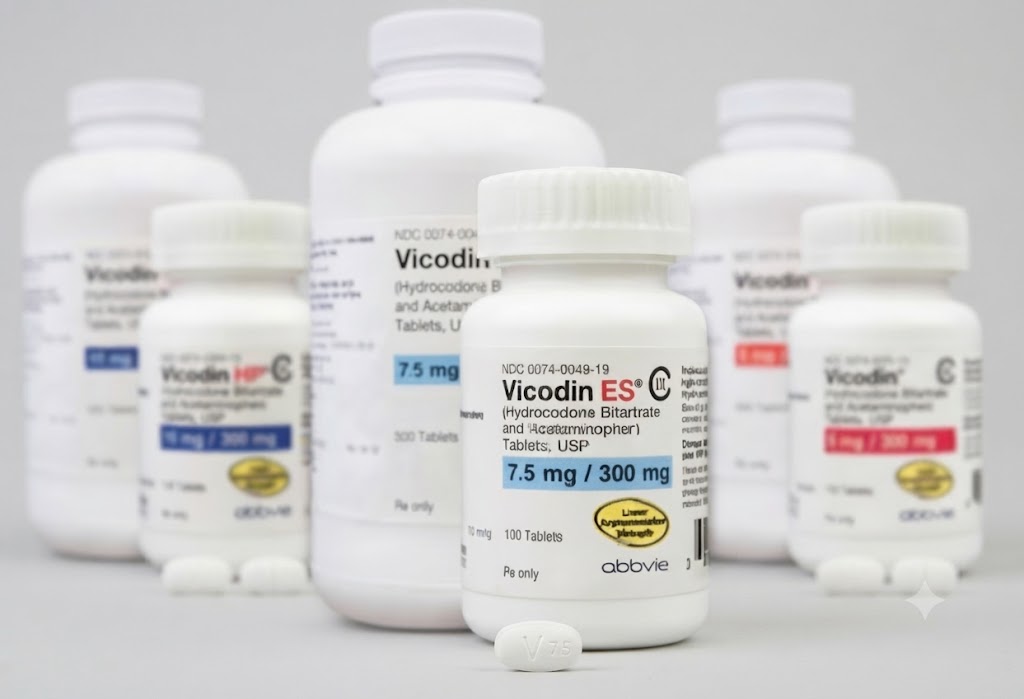
Vicodin Tablets

Price range: $79.00 through $340.00
Vicodin tablets are a widely recognized combination prescription medication used to manage moderate to severe pain. The medication combines two active ingredients: hydrocodone bitartrate, an opioid pain reliever, and acetaminophen, a non-opioid analgesic and fever reducer.
By targeting pain through two distinct biological pathways, Vicodin provides effective relief for acute injuries, surgical recovery, or severe pain episodes.
Because the hydrocodone component carries significant risks of addiction, dependence, and respiratory depression, and the acetaminophen component carries a risk of liver damage at high doses, safety is paramount. You must obtain a valid prescription from a licensed healthcare provider to receive this medication.
Introduction to Vicodin
Understanding prescription options is an essential step in managing acute or severe discomfort safely. Patients and caregivers frequently search for detailed information about Vicodin tablets to understand how this combination medication works, what benefits it offers, and how to avoid potential risks.
Having clear, medical facts helps you make informed decisions alongside your doctor. Vicodin plays a specific role in short-term pain control when non-opioid treatments alone fail to provide sufficient relief. This comprehensive guide outlines the drug’s biological mechanism, clinical uses, potential side effects, and essential safety guidelines.
What Is Vicodin?
Vicodin is the brand name for an oral combination medication containing hydrocodone bitartrate and acetaminophen. Healthcare professionals classify it as a central nervous system (CNS) opioid combination analgesic.
In this dual-action formulation, hydrocodone acts as a potent Schedule II controlled substance, while acetaminophen enhances its pain-relieving effects. Physicians prescribe Vicodin within structured clinical parameters to ensure patients receive effective pain control while minimizing the risks associated with opioid therapy.
How Vicodin Works
Vicodin achieves its therapeutic effects through two complementary mechanisms that target the central nervous system and peripheral pain pathways.
First, hydrocodone binds to mu-opioid receptors in the brain and spinal cord. This binding action blocks pain signals from traveling along nerve pathways to conscious brain centers and alters your emotional response to pain.
Second, acetaminophen inhibits prostaglandin synthesis in the central nervous system. Prostaglandins are chemicals that signal pain and trigger fever in the body. By reducing prostaglandin production, acetaminophen elevates your overall pain threshold. Together, these two active ingredients deliver enhanced pain relief compared to using either agent alone.
Uses of Vicodin
Doctors prescribe Vicodin tablets for specific clinical situations where potent dual-action pain relief is required:
-
Moderate to Severe Acute Pain: Physicians commonly prescribe Vicodin for short-term pain relief following surgical operations, dental procedures, or traumatic injuries like bone fractures.
-
Acute Pain Flares: Healthcare providers may utilize it for managing acute, severe pain episodes when non-opioid medications prove inadequate.
Note: Due to the risks associated with long-term acetaminophen exposure and opioid tolerance, Vicodin is generally intended for short-term use rather than long-term chronic pain management.
Benefits of Vicodin
When taken under strict medical supervision, Vicodin tablets provide several clinical benefits:
-
Dual-Action Pain Relief: Combining an opioid with a non-opioid compound targets pain through two separate biological pathways for greater efficacy.
-
Lower Individual Opioid Doses: The synergistic effect of acetaminophen allows for effective pain relief using a lower dose of hydrocodone than would otherwise be required.
-
Rapid Onset: Immediate-release oral tablets begin working relatively quickly to relieve acute distress.
-
Fever Reduction: The acetaminophen component also works as an antipyretic to help reduce accompanying fevers.
Dosage Information
You must always take Vicodin tablets exactly as instructed by your healthcare provider. Never adjust your dose or take the medication more frequently than prescribed.
-
Individualized Dosing: Your doctor will prescribe a specific strength and schedule based on your pain severity, body weight, and medical history.
-
Oral Ingestion: Swallow tablets whole with a full glass of water. Take the medication with food if it causes stomach upset.
-
Maximum Daily Acetaminophen Limit: Pay strict attention to total daily acetaminophen intake from all sources (including OTC cold or headache medicines). Exceeding 3,000 to 4,000 milligrams of acetaminophen per day can cause severe, irreversible liver damage.
Your physician will prescribe the lowest effective dose for the shortest duration necessary to control your symptoms.
Possible Side Effects
Vicodin tablets can cause side effects ranging from mild, temporary discomfort to severe medical emergencies.
Common Side Effects
-
Dizziness, lightheadedness, or drowsiness
-
Nausea, vomiting, or stomach upset
-
Constipation
-
Dry mouth
-
Mild headache or feeling overly relaxed
Serious Side Effects Requiring Immediate Medical Attention
Seek emergency medical care immediately if you experience:
-
Severe Respiratory Depression: Dangerously slow, shallow, or labored breathing.
-
Hepatotoxicity (Liver Damage): Yellowing of the skin or eyes (jaundice), dark urine, severe upper right abdominal pain, or extreme fatigue.
-
Severe Allergic Reactions: Swelling of the face, lips, throat, or tongue, accompanied by severe skin rash, peeling, or hives.
-
Extreme Sedation: Severe confusion, inability to stay awake, or loss of consciousness.
-
Serotonin Syndrome: Agitation, fever, rapid heart rate, or muscle stiffness when taken alongside certain serotonergic drugs.
Safety Information
Careful medical screening ensures Vicodin tablets are safe for your specific health situation.
Contraindications
Do not take Vicodin tablets if you:
-
Have severe asthma, acute respiratory depression, or unmonitored breathing problems.
-
Suffer from severe liver impairment or acute liver failure.
-
Have a known or suspected gastrointestinal blockage, including paralytic ileus.
-
Possess a known hypersensitivity or severe allergy to hydrocodone, acetaminophen, or other opioids.
Drug Interaction Considerations
Tell your doctor about all prescription drugs, over-the-counter products, and herbal supplements you take. Combining Vicodin with alcohol, benzodiazepines, sleeping pills, or other CNS depressants dramatically increases the risk of severe sedation, respiratory arrest, coma, and death. Never combine Vicodin with other medications containing acetaminophen.
Frequently Asked Questions
What are Vicodin tablets used for?
Healthcare providers prescribe Vicodin tablets to manage moderate to severe acute pain when non-opioid alternatives are insufficient.
What is the difference between Vicodin and Hydrocodone?
Hydrocodone is the individual opioid drug ingredient. Vicodin is a specific brand name for a combination tablet that contains both hydrocodone and acetaminophen.
Is Vicodin available over the counter?
No. Vicodin is a Schedule II controlled prescription drug. You must obtain a valid prescription from a licensed healthcare provider.
Why does Vicodin contain acetaminophen?
Acetaminophen enhances the pain-relieving effects of hydrocodone, allowing for effective pain relief with a lower dose of the opioid component.
Can I drink alcohol while taking Vicodin?
No. You must strictly avoid alcohol while taking Vicodin. Combining alcohol with hydrocodone increases the risk of fatal respiratory depression, while combining alcohol with acetaminophen greatly increases the risk of severe liver toxicity.
Are Vicodin tablets habit-forming?
Yes. Vicodin contains hydrocodone, which carries a risk of physical dependence, tolerance, and addiction. Following your doctor’s exact instructions minimizes these risks.
What should I do if I miss a dose?
If you take Vicodin on a regular schedule and miss a dose, take it as soon as you remember. If it is almost time for your next dose, skip the missed dose entirely. Never take two doses at once.
How should I store Vicodin tablets safely?
Store Vicodin at room temperature away from heat, moisture, and direct light. Keep tablets in a secure, locked location completely out of reach of children and visitors.
| Pills | 30, 60, 90, 100, 150, 200 |
|---|
Be the first to review “Vicodin Tablets”
Related products
Opioid Medications
Opioid Medications
Arthritis Care
Opioid Medications
Opioid Medications
Opioid Medications
Pain Relief
Reviews
There are no reviews yet.