
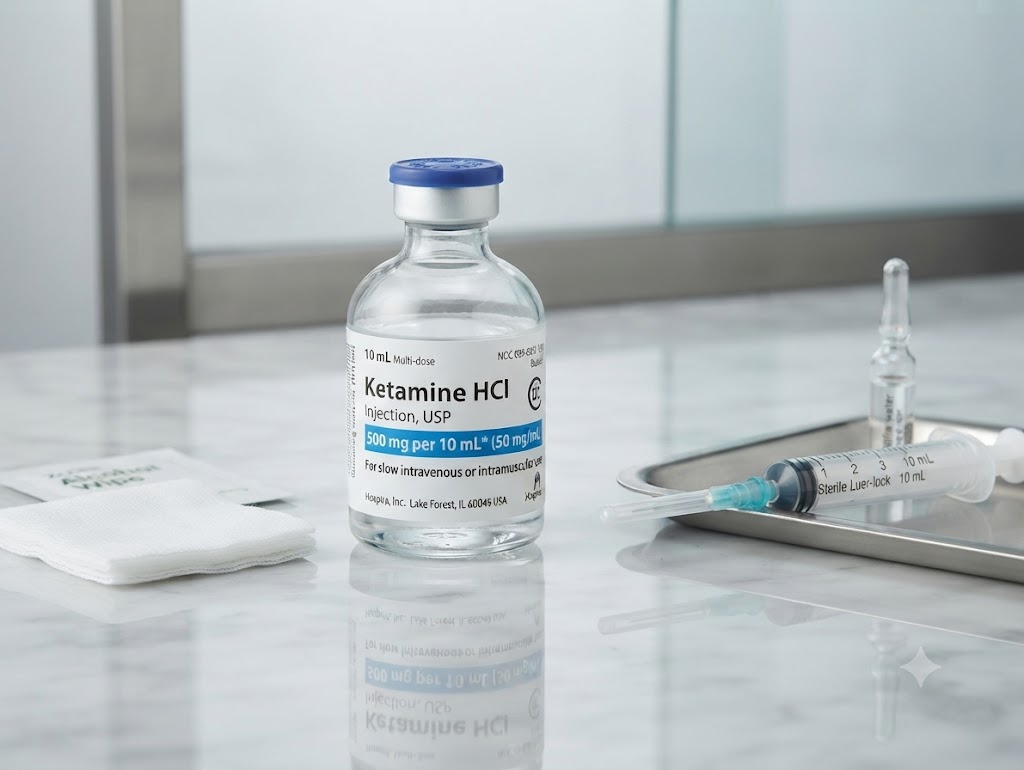
Ketamine

Price range: $150.00 through $2,500.00
Ketamine injection is a potent prescription anesthetic medication. Healthcare providers utilize this central nervous system agent primarily to induce and maintain general anesthesia during diagnostic and surgical procedures.
The active ingredient acts as an NMDA receptor antagonist. This mechanism alters neurotransmitter signals in the brain, producing rapid sedation, analgesia, and a temporary detachment from environmental sensory input.
Because ketamine carries risks of hallucinations, blood pressure alterations, dependence, and respiratory depression at high doses, medical safety remains paramount. Qualified healthcare professionals administer this medication strictly in clinical settings under continuous monitoring. You must obtain a valid prescription or direct order from a licensed provider to receive this agent.
Ketamine Drug | Ketamine injectable | Ketamine for sale online
Navigating specialized medical treatments requires accurate, evidence-based healthcare information. Patients, caregivers, and medical professionals frequently research Ketamine to understand how this versatile medication functions and why clinical protocols regulate its application so carefully.
Understanding your medical care helps you make informed health choices alongside your clinical team. Ketamine serves a vital function in acute medicine, surgery, and emergency settings when patients require reliable sedation and analgesia. This comprehensive guide details the drug’s clinical uses, biological mechanisms, side effect profile, and essential safety protocols.
What Is Ketamine?
Ketamine is a synthetic chemical compound available as an injectable solution. Healthcare professionals classify it as a dissociative general anesthetic and an NMDA receptor antagonist.
In hospital and clinical settings, licensed practitioners administer ketamine injection via intravenous (IV) or intramuscular (IM) routes. The drug maintains a unique status on the World Health Organization’s List of Essential Medicines due to its safety profile regarding airway preservation. Because ketamine possesses misuse potential, federal authorities regulate it as a Schedule III controlled substance.
How it Works
When tissue trauma or surgical manipulation occurs, complex neural networks transmit signal impulses directly to conscious brain centers. Ketamine interrupts this sensory processing through a unique neurological pathway.
The active ingredient, ketamine hydrochloride, selectively blocks N-methyl-D-aspartate (NMDA) receptors in the brain. By inhibiting these glutamate receptors, the drug disrupts communication between the limbic system and the cerebral cortex.
Consequently, the brain stops registering sensory signals normally. This state—known as dissociative anesthesia—relieves pain effectively while causing profound sedation, amnesia, and temporary detachment from environmental stimuli.
Uses of Ketamine
-
Induction and Maintenance of Anesthesia: Anesthesiologists use ketamine as a primary or secondary agent to induce anesthesia before surgical or diagnostic interventions.
-
Procedural Sedation: Emergency clinicians use low doses for short, painful procedures, such as setting broken bones or treating extensive wounds.
-
Analgesia Supplement: Doctors utilize low-dose infusions alongside other agents to control severe acute pain when conventional opioids are insufficient or contraindicated.
-
Treatment-Resistant Depression: Specialized clinics administer controlled infusions (or S-ketamine nasal spray variants) for severe depressive episodes that fail standard treatments.
Benefits
-
Airway Maintenance: Unlike many conventional anesthetics, ketamine generally preserves spontaneous respiration and protective airway reflexes.
-
Cardiovascular Support: The drug stimulates the sympathetic nervous system, helping maintain stable blood pressure and heart rate during emergency procedures.
-
Rapid Onset: Intravenous administration produces therapeutic anesthetic effects within seconds, enabling swift emergency interventions.
-
Opioid-Sparing Relief: Effective pain management reduces a patient’s total reliance on high-dose opioid analgesics.
Dosage Information
-
Induction Dosing: For general anesthesia, clinicians calculate intravenous doses based on lean body mass, typically starting between 1 mg/kg and 4.5 mg/kg.
-
Intramuscular Dosing: When intravenous access is challenging, clinicians may administer intramuscular doses ranging from 6.5 mg/kg to 13 mg/kg.
-
Continuous Monitoring: Medical teams continuously evaluate heart rate, blood pressure, oxygen saturation, and respiratory depth during administration.
Patients must never attempt to self-administer injectable ketamine outside of a licensed healthcare facility.
Possible Side Effects
Ketamine can produce side effects ranging from temporary perceptual shifts to severe cardiovascular events.
Common Side Effects
-
Emergence reactions (vivid dreams, illusions, or temporary confusion upon waking)
-
Elevated blood pressure and temporary increase in heart rate
-
Nausea, vomiting, and mild salivation
-
Dizziness, blurred vision, or involuntary eye movements (nystagmus)
-
Mild skin flushing or transient rash
Serious Side Effects Requiring Immediate Attention
Clinical teams monitor closely for severe adverse events, including:
-
Severe Respiratory Depression: Abnormally slow or shallow breathing, particularly after rapid intravenous push.
-
Laryngospasm: Sudden constriction of the vocal cords that obstructs normal airway passage.
-
Severe Hypertension or Arrhythmias: Dangerous spikes in blood pressure or irregular cardiac rhythms.
-
Severe Emergent Agitation: Intense psychological distress, panic, or delirium during recovery.
Safety Information
Rigorous pre-procedure screening ensures Ketamine remains safe for your unique health profile.
Contraindications
Clinicians avoid or restrict ketamine administration in patients with:
-
Severe, uncontrolled high blood pressure or significant vascular disease.
-
A history of aneurysms or acute cardiovascular events where elevated blood pressure poses a severe risk.
-
Known hypersensitivity or severe allergic reaction to ketamine hydrochloride.
-
Intracranial mass lesions or conditions where elevated intracranial pressure is dangerous.
Drug Interaction Considerations
Always inform your healthcare team about all current medications. Combining this with central nervous system depressants, alcohol, or sedatives intensifies sedation and increases the risk of respiratory arrest. Furthermore, thyroid medications taken concurrently with this Drug may cause severe high blood pressure and rapid heart rates.
Frequently Asked Questions
What is Ketamine injection used for?
Healthcare providers use Ketamine injection to induce general anesthesia, provide procedural sedation, and assist in managing severe acute pain within clinical settings.
How fast does Ketamine injection work?
Intravenous ketamine acts within 30 seconds, producing prompt anesthesia. Intramuscular administration usually takes 3 to 4 minutes to take full effect.
Is Ketamine available over the counter?
No. Ketamine is a Schedule III controlled prescription drug. Only authorized healthcare professionals in clinical or hospital environments can order and administer it.
How does Ketamine differ from traditional opioids?
Ketamine works as an NMDA receptor antagonist rather than binding to mu-opioid receptors. It provides pain relief and sedation without causing the same level of airway suppression as classic opioids.
What is an emergence reaction?
An emergence reaction occurs as ketamine wears off. Patients may experience vivid dreams, floating sensations, or temporary confusion while returning to full consciousness.
Can Ketamine be taken at home?
Standard injectable ketamine requires professional administration and continuous vital sign monitoring in a medical facility. Home use of non-prescribed ketamine is illegal and dangerous.
Are there long-term risks associated with Ketamine?
Frequent, unmonitored abuse of ketamine can cause severe urinary tract damage (ketamine-induced cystitis), liver dysfunction, cognitive impairment, and psychological dependence.
Does Ketamine affect blood pressure?
Yes. Ketamine typically increases heart rate and blood pressure temporarily. Medical teams monitor vital signs continuously to manage these changes safely.
| Vials | 3, 5, 10, 20, 50, 100 |
|---|
Be the first to review “Ketamine”
Related products
ADHD
Weight loss
ADHD
Opioid Medications
ADHD

ADHD
Reviews
There are no reviews yet.