

Qelbree: Uses, Dosage, Side Effects, and Safety Guide
Qelbree is the first genuinely new non-stimulant molecule approved for ADHD in more than two decades, arriving on the market roughly 20 years after Strattera. Because it’s built on viloxazine rather than atomoxetine, it works through a related but distinct mechanism, and clinical trials suggest it starts working faster than its older counterpart. Since it isn’t a controlled substance, Qelbree’s safety profile centers on a different set of concerns — including its own boxed warning for suicidal thoughts and behavior.
The information below reflects current FDA prescribing information for Qelbree. It’s meant for general education, so it doesn’t replace advice from a licensed prescriber or pharmacist.
Product Overview
What Is Qelbree?
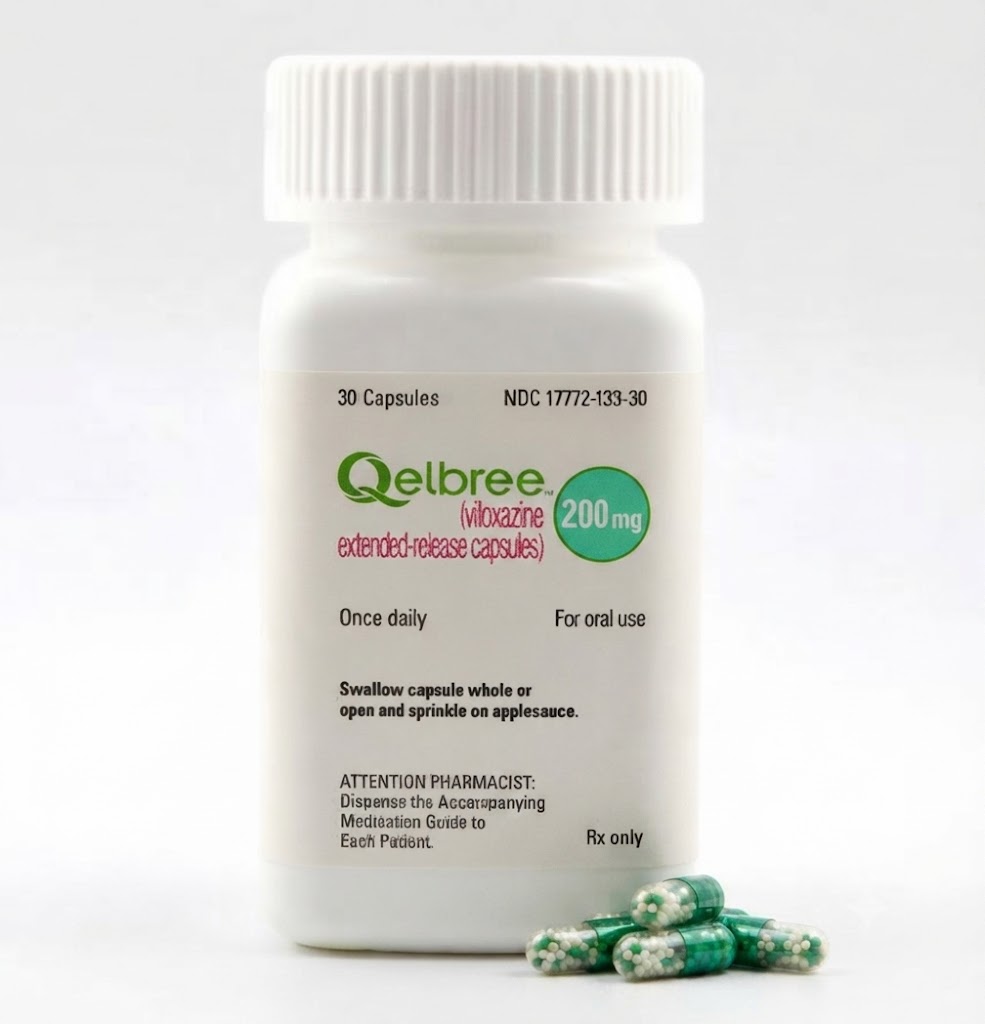
Qelbree delivers viloxazine, a selective norepinephrine reuptake inhibitor with some additional serotonin-modulating activity, in an extended-release capsule. The FDA first approved it for children in April 2021, then expanded that approval to adults in April 2022 — making it the first new non-stimulant ADHD medication in over 20 years.
Active Ingredient
The active ingredient is viloxazine hydrochloride, a selective norepinephrine reuptake inhibitor structurally distinct from both stimulants and atomoxetine.
Brand Name and Generic Name
Supernus Pharmaceuticals manufactures and distributes Qelbree. As of this writing, no generic version has reached the market.
Drug Classification
Qelbree belongs to a class called selective norepinephrine reuptake inhibitors, the same broad category as Strattera, though the two medications use different molecules. Because Qelbree isn’t a controlled substance, it carries no DEA schedule.
FDA-Approved Uses
Qelbree is approved for one indication:
- Attention deficit hyperactivity disorder (ADHD), in both adults and pediatric patients 6 years of age and older.
Because this age range covers children, adolescents, and adults without a separate age-based indication split, Qelbree offers a single, continuous approval across the lifespan.
Evidence-Supported Off-Label Uses
Some early research has explored viloxazine for conditions like adult anxiety, since older international formulations of the drug were historically used as an antidepressant in some countries. Because this isn’t part of Qelbree’s current FDA-approved labeling in the U.S., any such use would be off-label and should only happen under individualized prescriber judgment.
How It Works
The exact mechanism behind viloxazine’s ADHD benefit remains unclear, though it’s believed to work primarily by selectively inhibiting norepinephrine reuptake, with some additional effects on serotonin signaling. Because this dual mechanism differs somewhat from atomoxetine’s more purely noradrenergic action, researchers have proposed it may contribute to Qelbree’s comparatively faster onset of benefit.
Product Information Table
| Attribute | Detail |
|---|---|
| Brand | Qelbree |
| Generic | Viloxazine hydrochloride extended-release |
| Active Ingredient | Viloxazine hydrochloride |
| Drug Class | Selective norepinephrine reuptake inhibitor (non-stimulant) |
| Manufacturer | Supernus Pharmaceuticals |
| Prescription Status | Prescription only |
| Controlled Substance Status | Not a controlled substance |
| Dosage Forms | Extended-release capsule |
| Strengths | 100 mg, 150 mg, 200 mg |
| Administration Route | Oral |
| Onset of Action | Significant improvement often seen within 1–2 weeks |
| Duration of Effect | Once-daily dosing |
| Steady State | Reached within 2 days of once-daily dosing, with no drug accumulation over time |
| Storage | Room temperature, protected from excess heat and moisture |
Available Strengths
Qelbree’s three strengths allow the fine dose adjustments needed across its wide approved age range.
| Strength | Dosage Form |
|---|---|
| 100 mg | Extended-release capsule |
| 150 mg | Extended-release capsule |
| 200 mg | Extended-release capsule |
Because doses above 200 mg are reached by combining capsules or through specific titration steps, patients should follow their prescriber’s exact instructions rather than assuming strengths combine in a simple way.
Dosage Guide
Because Qelbree’s dosing varies meaningfully by age group, a prescriber tailors both the starting dose and the maximum to the patient’s specific age.
Children (6 to 11 Years)
The recommended starting dose is 100 mg once daily. The dose may be increased in 100 mg increments at weekly intervals, up to a maximum of 400 mg once daily, based on response and tolerability.
Adolescents (12 to 17 Years)
The recommended starting dose is 200 mg once daily. The dose may be increased in 100 mg increments at weekly intervals, up to a maximum of 400 mg once daily.
Adults
The recommended starting dose is 200 mg once daily. The dose may be increased in 100 mg increments at weekly intervals, up to a maximum of 600 mg once daily. In clinical trials, the average maintenance dose was around 500 mg per day, and most adults needed at least 400 mg daily for optimal control.
Older Adults
The label doesn’t provide separate geriatric dosing guidance beyond the standard adult range, so prescribers apply general clinical judgment when treating older adults.
Kidney Disease
For patients with severe kidney impairment (eGFR below 30), the recommended starting dose drops to 100 mg, with increases of 50 mg to 100 mg at weekly intervals up to a maximum of 200 mg once daily — well below the standard adult ceiling. No dose adjustment is needed for mild to moderate kidney impairment.
Liver Disease
The label doesn’t provide a specific dosing table for liver impairment, though a prescriber should be informed of any significant liver condition before starting treatment.
How to Take It
With or Without Food
Patients can take Qelbree with or without food, based on individual preference.
Swallowing Options
Capsules can be swallowed whole, or opened and sprinkled over a spoonful of pudding or applesauce. If sprinkled on pudding, the mixture should be eaten within 15 minutes; if sprinkled on applesauce, within 2 hours. Either way, the mixture shouldn’t be chewed or stored for later use.
Missed Dose
If a dose is missed, patients should generally take it as soon as they remember that day, unless it’s close to the next scheduled dose, in which case they should skip it rather than doubling up. Patients should check with their prescriber for guidance specific to their situation.
Discontinuing Treatment
Because Qelbree may cause maternal harm if continued during pregnancy, it should generally be discontinued once pregnancy is recognized unless the benefits of continuing treatment outweigh the risk. Otherwise, patients should discuss any plan to stop Qelbree with their prescriber first.
Overdose
Because Qelbree overdose can cause significant drowsiness, impaired consciousness, or an elevated heart rate, anyone who suspects an overdose should call Poison Control at 1-800-222-1222 or seek emergency medical care right away. No specific antidote exists, so treatment relies on supportive care.
Storage
Patients should store Qelbree at room temperature, away from excess heat and moisture, and out of reach of children.
Benefits
Because Qelbree isn’t a controlled substance, it offers a meaningful non-stimulant option without the prescribing restrictions, refill limits, or abuse-potential concerns that come with Schedule II stimulants. Clinical trials also found that many patients notice improvement within one to two weeks — faster than the roughly four weeks typically associated with Strattera — which can matter for patients and families hoping for quicker feedback on whether a medication is working. Long-term extension studies have also shown symptom improvements maintained for more than two years of continued treatment.
Side Effects
Because viloxazine affects the nervous and cardiovascular systems, its side effects span both, and they differ somewhat between children and adults.
Common Side Effects (Children)
- Somnolence (sleepiness)
- Decreased appetite
- Fatigue
- Nausea or vomiting
- Insomnia
- Irritability
Common Side Effects (Adults)
- Insomnia
- Headache
- Somnolence
- Fatigue
- Nausea
- Decreased appetite
- Dry mouth
- Constipation
Serious Side Effects
- Suicidal thoughts or behavior, especially early in treatment or after a dose change
- New or worsening psychiatric symptoms, including mania or hypomania
- Increased blood pressure and heart rate
- Significant sedation or fatigue affecting alertness
Emergency Symptoms
Because these signs can indicate a medical emergency, patients should seek immediate care for:
- Suicidal thoughts or actions
- Chest pain, a pounding heartbeat, or severe dizziness
- New manic symptoms, such as unusually elevated mood, racing thoughts, or reckless behavior
- Signs of a severe allergic reaction, such as facial or throat swelling
Drug Interactions
Because viloxazine strongly affects a specific liver enzyme, Qelbree’s interaction profile centers heavily on that one pathway.
Prescription Drugs
Combining Qelbree with monoamine oxidase inhibitors (MAOIs) is contraindicated, since doing so risks a hypertensive crisis. More distinctively, viloxazine is a strong inhibitor of the CYP1A2 liver enzyme, so combining Qelbree with sensitive CYP1A2 substrates, or CYP1A2 substrates that have a narrow safety margin, is also contraindicated, since it can significantly raise those other medications’ blood levels. Because of this, prescribers check a patient’s full medication list carefully before starting Qelbree.
OTC Medicines
Since caffeine is metabolized through the same CYP1A2 pathway that Qelbree strongly inhibits, patients who consume significant caffeine may notice its effects feel stronger or last longer while taking Qelbree.
Alcohol
The label doesn’t detail a specific alcohol interaction for Qelbree, but combining it with alcohol can add to its sedative effects, so caution is still warranted.
Supplements
No specific supplement interactions are highlighted in the current label, but patients should always disclose supplement use to their prescriber.
Herbal Products
As with supplements generally, herbal products affecting liver enzyme activity or mood deserve the same disclosure and caution.
Foods
No major food restriction applies to Qelbree, since it can be taken with or without food.
Warnings
Qelbree carries an FDA boxed warning — the agency’s strongest safety warning — for increased rates of suicidal thoughts and behavior compared with placebo in clinical trials. In pediatric trials, 0.9% of Qelbree-treated patients reported suicidal ideation or behavior, compared with 0.4% on placebo; in adult trials, 1.6% reported suicidal ideation, compared with 0% on placebo. Because of this, close monitoring matters most in the first few months of treatment and around any dose change.
Beyond the boxed warning, Qelbree carries warnings for increased blood pressure and heart rate, the potential to trigger a manic or hypomanic episode in patients with an underlying risk for bipolar disorder, and somnolence or fatigue significant enough to affect activities like driving. Nonclinical studies have also suggested a potential for Qelbree to affect cardiac sodium channels, though a clinical study at three times the maximum dose didn’t find a clinically meaningful effect on the QT interval.
Contraindications
Patients shouldn’t take Qelbree if they:
- Are currently taking, or have taken within the past 14 days, a monoamine oxidase inhibitor (MAOI)
- Are taking a sensitive CYP1A2 substrate medication, or a CYP1A2 substrate with a narrow therapeutic range
Pregnancy
Based on animal reproduction studies, viloxazine may cause harm to the mother when used during pregnancy, so the label generally recommends discontinuing Qelbree once pregnancy is recognized, unless the benefits of continuing treatment outweigh this risk. Available case-series data in pregnant women remain insufficient to determine whether viloxazine raises the risk of major birth defects or miscarriage specifically. Animal studies found fetal toxicity and delayed development in rats, along with maternal toxicity in rabbits, at doses roughly equivalent to the maximum recommended human dose. A pregnancy exposure registry tracks outcomes for people exposed to Qelbree during pregnancy.
Breastfeeding
The current label doesn’t provide specific human data on whether viloxazine passes into breast milk. Because many medications do transfer into human milk, caution is advised when Qelbree is used by a nursing parent.
Monitoring Requirements
Prescribers typically monitor the following throughout treatment:
- Signs of suicidal thinking or behavior, especially early in treatment and after dose changes
- Blood pressure and heart rate at baseline, after dose increases, and periodically during treatment
- Personal or family history of suicide, bipolar disorder, or depression before starting
- Signs of new or worsening mania, hypomania, or other psychiatric symptoms
- Degree of sedation or fatigue, particularly regarding activities like driving
Storage Instructions
Patients should store Qelbree at room temperature, away from excess heat and moisture, and out of reach of children.
Frequently Asked Questions
What is Qelbree used for?
Qelbree treats attention deficit hyperactivity disorder (ADHD) in both adults and children 6 years of age and older. Because its approval spans that entire age range without a separate pediatric-versus-adult indication split, the same medication covers patients from childhood through adulthood.
Is Qelbree a stimulant?
No. Qelbree works as a selective norepinephrine reuptake inhibitor rather than a stimulant, placing it in the same general category as Strattera, though the two use different active molecules. Because it’s not a stimulant, Qelbree isn’t a controlled substance and doesn’t carry the same abuse-related prescribing restrictions.
What is the typical starting dose of Qelbree?
For children 6 to 11, treatment starts at 100 mg once daily. For adolescents 12 to 17 and adults, it starts at 200 mg once daily. From there, a prescriber increases the dose in 100 mg steps at weekly intervals, up to a maximum of 400 mg for children and adolescents, or 600 mg for adults.
How long does it take for Qelbree to start working?
Many patients notice meaningful improvement within one to two weeks, which is faster than the roughly four weeks typically associated with Strattera. Even so, individual response varies, and a prescriber may continue adjusting the dose during this period to find the most effective level.
Can Qelbree be taken with food?
Yes, Qelbree can be taken with or without food, based on what works best for the patient.
Can Qelbree capsules be opened?
Yes. If swallowing the capsule whole is difficult, it can be opened and sprinkled over a spoonful of pudding or applesauce. The pudding mixture should be eaten within 15 minutes, and the applesauce mixture within 2 hours, without chewing either one.
Why does Qelbree carry a suicide-risk warning?
Clinical trials found a higher rate of suicidal thinking or behavior among patients taking Qelbree compared with placebo, in both pediatric and adult trials. Because of this finding, the FDA required a boxed warning, and it’s why close monitoring matters most during the first few months of treatment and around dose changes.
Can Qelbree interact with other medications?
Yes, notably through a liver enzyme called CYP1A2, which viloxazine strongly inhibits. Combining Qelbree with sensitive CYP1A2 substrate medications is contraindicated, since it can significantly raise those medications’ blood levels. Combining Qelbree with MAOIs is also contraindicated due to the risk of hypertensive crisis.
What are the most common side effects of Qelbree?
In children, the most common side effects include sleepiness, decreased appetite, fatigue, nausea, and insomnia. In adults, common side effects include insomnia, headache, sleepiness, fatigue, nausea, and dry mouth. Most side effects are mild, but anything severe or persistent should be reported to a prescriber.
Is Qelbree addictive?
No, not in the way stimulant ADHD medications can be. Because Qelbree isn’t a controlled substance and hasn’t shown the reinforcing effects associated with stimulants, it carries essentially no risk of the kind of misuse or diversion concerns that apply to Schedule II medications.
Can Qelbree affect the heart?
Yes, to some degree. Qelbree can raise blood pressure and heart rate, which is why prescribers monitor both before starting treatment, after dose increases, and periodically afterward. Nonclinical research also suggests a potential effect on cardiac sodium channels, though a dedicated clinical study didn’t find a meaningful effect on heart rhythm timing at three times the maximum dose.
Is Qelbree safe during pregnancy?
The evidence here leans toward caution: animal studies suggest viloxazine may cause harm to the mother during pregnancy, and the label generally recommends discontinuing Qelbree once pregnancy is recognized unless the benefits clearly outweigh this risk. A pregnancy exposure registry tracks outcomes for people exposed to Qelbree during pregnancy, and anyone who is pregnant or planning pregnancy should discuss this directly with their prescriber.
Can adults take Qelbree?
Yes. Qelbree received its original approval for children in 2021, with adult approval following in 2022, making it available across the full age range from 6 years old through adulthood. Adults typically start at 200 mg once daily, with a maximum of 600 mg.
Does kidney function affect Qelbree dosing?
Yes, for severe kidney impairment specifically. Patients with an eGFR below 30 start at a lower 100 mg dose and cap out at a maximum of 200 mg daily, well below the standard adult ceiling of 600 mg. Mild to moderate kidney impairment doesn’t require a dose adjustment.
What should I do if I think I’ve taken too much Qelbree?
Suspected overdose warrants prompt medical attention, since symptoms can include significant drowsiness, impaired consciousness, or an elevated heart rate. Patients should call Poison Control at 1-800-222-1222 or go to the nearest emergency room, since no specific antidote exists and treatment relies on supportive care.
Conclusion
Qelbree represents a genuine advance for non-stimulant ADHD treatment: the first new molecule in this space in over 20 years, with a faster onset than Strattera and continuous approval across the full age range from childhood through adulthood. That said, it isn’t free of serious considerations — the same class of suicidality boxed warning that applies to Strattera, a distinctive and important CYP1A2 drug-interaction profile, and pregnancy guidance that leans more cautious than some alternatives. Patients and caregivers who understand these specifics are better positioned to have an informed conversation with their prescriber about whether Qelbree fits their situation.
| Pills | 30, 60, 90, 100, 150, 200 |
|---|
Be the first to review “Qelbree”
Related products
ADHD
ADHD
ADHD
ADHD
ADHD

Opioid Medications

ADHD
Weight loss
Reviews
There are no reviews yet.