
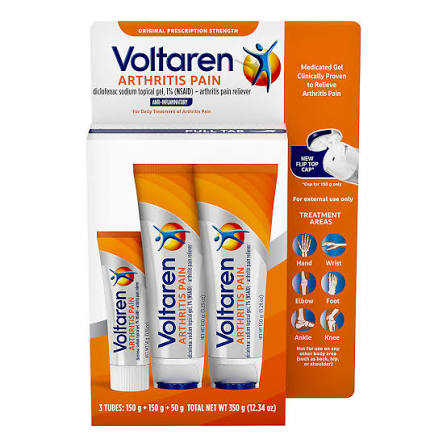
Voltaren Arthritis Pain Gel (Diclofenac Sodium 1%)
Original price was: $17.99.$14.99Current price is: $14.99.
Voltaren Arthritis Pain Gel delivers diclofenac sodium, an NSAID, directly to sore joints, offering targeted relief for hand, wrist, elbow, foot, ankle, and knee arthritis without swallowing a pill.
300 in stock
What Is Voltaren Arthritis Pain Gel?
Voltaren Arthritis Pain Gel is an over-the-counter topical NSAID containing 1% diclofenac sodium, applied directly to the skin over an arthritic joint. Because the medication absorbs through the skin rather than traveling through the digestive system first, it delivers pain relief with meaningfully less of the drug reaching the bloodstream compared to an oral NSAID at an equivalent dose.
Common Uses for Voltaren Gel
Voltaren Arthritis Pain Gel is specifically approved for the temporary relief of arthritis pain in joints amenable to topical treatment: the hands, wrists, elbows, feet, ankles, and knees. It hasn’t been shown to work for pain in joints that sit deeper under muscle and tissue, such as the hip or spine, and the label specifically notes it hasn’t been studied for strains, sprains, bruises, or sports injuries.
How Voltaren Gel Works
Diclofenac blocks cyclooxygenase (COX) enzymes at the site of application, reducing the local production of prostaglandins that drive joint pain and inflammation. Because the gel targets the affected joint directly, many users find it reduces stiffness and discomfort within days of consistent use, while limiting the whole-body drug exposure that comes with swallowing an NSAID tablet.
Available Forms and Application Instructions
Voltaren Arthritis Pain Gel comes in a pump or tube, with a dosing card included to help measure the correct amount. For the hands, wrists, elbows, feet, and ankles, apply 2 grams (about a 2-inch strip) to the affected joint up to 4 times daily. For the knees, apply 4 grams (about a 4-inch strip) up to 4 times daily. The total amount used across all treated joints shouldn’t exceed 32 grams per day. Wash your hands after applying, unless the hands themselves are the treated joint, and avoid covering the area with a bandage, heating pad, or direct sunlight.
Benefits of Choosing Voltaren Gel
Because the medication stays largely localized to the joint it’s applied to, Voltaren Gel offers arthritis relief with a different risk profile than swallowing an oral NSAID every day, which matters for people concerned about stomach or systemic side effects. It also allows for targeted dosing exactly where pain occurs, rather than treating the whole body for one sore joint. For many people managing hand or knee arthritis specifically, this combination of targeted relief and reduced systemic exposure is the main draw.
Safety Considerations With Voltaren Gel
Even though less diclofenac reaches the bloodstream with topical use, Voltaren Gel still carries the same class-wide NSAID warnings as oral versions: an increased risk of heart attack, heart failure, and stroke, and a risk of stomach bleeding, both of which rise with higher doses, longer use, or when combined with oral NSAIDs like ibuprofen, aspirin, or naproxen. The gel shouldn’t be applied to broken, infected, or irritated skin, and it should avoid contact with the eyes and mucous membranes. It isn’t recommended for anyone under 18, and people with high blood pressure, heart disease, liver cirrhosis, kidney disease, asthma, or a history of stroke should ask a doctor before use. Pregnant or breastfeeding individuals should also check with a health professional first, particularly given NSAID-related risks in later pregnancy.
Storage Instructions
Store Voltaren Arthritis Pain Gel at room temperature with the cap tightly closed, away from excess heat, and out of reach of children.
| Dosage Form | Topical Gel |
|---|---|
| Strength | 1% diclofenac sodium |
Be the first to review “Voltaren Arthritis Pain Gel (Diclofenac Sodium 1%)”
Related products

ADHD
Reviews
There are no reviews yet.