
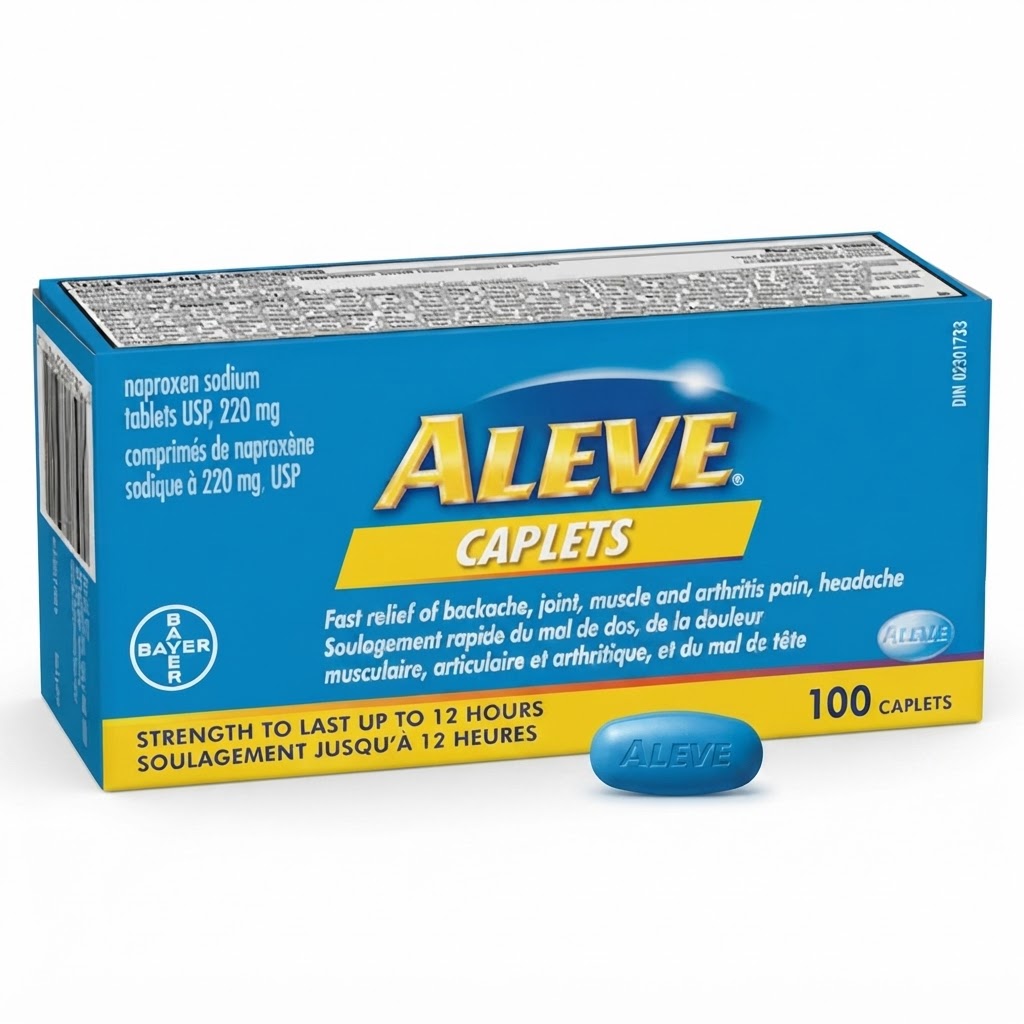
Aleve (Naproxen Sodium) 220 mg Pain Reliever
Original price was: $9.99.$7.99Current price is: $7.99.
Aleve (naproxen sodium) is an over-the-counter NSAID that relieves minor aches, reduces fever, and calms everyday pain from headaches, backaches, and arthritis for up to 12 hours per dose.
500 in stock
What Is Aleve?
Aleve is the brand name for naproxen sodium, a nonsteroidal anti-inflammatory drug (NSAID) sold without a prescription. Because it reduces the body’s production of prostaglandins, the chemicals responsible for pain and inflammation, Aleve tackles both the ache itself and the swelling that often comes with it. Many people reach for Aleve specifically because a single dose can last up to 12 hours, longer than several other OTC pain relievers.
Common Uses for Aleve
Aleve is approved for the temporary relief of minor aches and pains associated with headaches, muscle aches, backaches, minor arthritis pain, toothaches, the common cold, and menstrual cramps. It also works as a fever reducer. Because it addresses inflammation directly, it’s often a preferred choice for pain that comes with swelling, such as a strained muscle or an arthritic joint, rather than pain alone.
How Aleve Works
Naproxen sodium blocks cyclooxygenase (COX) enzymes, which the body uses to produce prostaglandins. Since prostaglandins drive both pain signaling and the inflammatory response, reducing them calms swelling and discomfort at the same time. This dual action is what separates NSAIDs like Aleve from acetaminophen, which relieves pain but doesn’t meaningfully reduce inflammation.
Available Forms and Aleve Dosage
Aleve is sold as tablets, caplets, gelcaps, and liquid gels, each containing 220 mg of naproxen sodium (equivalent to 200 mg of naproxen). For adults and children 12 and older, the standard OTC dose is one tablet every 8 to 12 hours. If needed, two tablets can be taken for the first dose, followed by one tablet 12 hours later, with a maximum of three tablets in 24 hours unless a doctor advises otherwise. Aleve shouldn’t be used for pain longer than 10 days, or for fever longer than 3 days, without medical guidance.
Benefits of Choosing Aleve
Because Aleve’s 12-hour duration allows for less frequent dosing than ibuprofen, many people find it more convenient for all-day or overnight relief. It’s also widely available, affordable, and backed by decades of consumer use for everyday pain and inflammation. That said, convenience doesn’t change the underlying safety profile shared by all non-aspirin NSAIDs, which is why the warnings below matter just as much as the benefits.
Safety Considerations With Aleve
Like other non-aspirin NSAIDs, Aleve carries an FDA-mandated warning for increased risk of heart attack, heart failure, and stroke, a risk that rises with higher doses or longer use. It can also cause stomach bleeding, which becomes more likely in people over 60, those with a history of ulcers, and anyone taking blood thinners, other NSAIDs, or three or more alcoholic drinks daily. Aleve shouldn’t be combined with aspirin, ibuprofen, or other NSAID-containing products unless a doctor says otherwise, since doing so raises the risk of side effects without adding pain relief. People with an aspirin allergy, asthma triggered by NSAIDs, kidney disease, or late-stage pregnancy should talk with a doctor before use, and anyone on ACE inhibitors, diuretics, or SSRIs should mention their Aleve use to a pharmacist, since these combinations can affect kidney function or bleeding risk.
Storage Instructions
Store Aleve at room temperature, away from excess heat and moisture, and keep it out of reach of children. Do not use Aleve past its expiration date.
| Dosage Form | Tablet, Caplet, Gelcap, Liquid Gel |
|---|---|
| Strength | 220 mg |
Be the first to review “Aleve (Naproxen Sodium) 220 mg Pain Reliever”
Related products

Reviews
There are no reviews yet.