
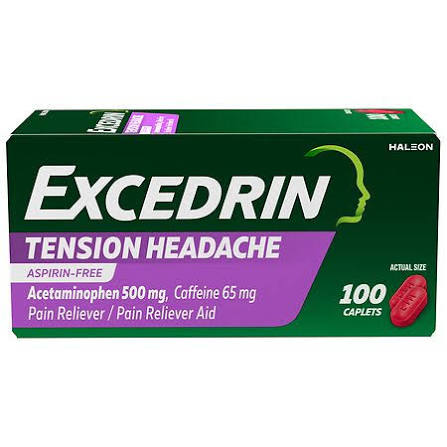
What Is Excedrin?
Excedrin is an over-the-counter combination pain reliever built from three active ingredients: acetaminophen, aspirin, and caffeine. Because these ingredients work through different pathways at once, Excedrin is formulated specifically for headache pain that a single-ingredient product may not fully address, including the throbbing, light-sensitive pain typical of a migraine.
Common Uses for Excedrin
Excedrin Migraine is FDA-approved specifically for the treatment of migraine headache pain, along with the sensitivity to light and sound that often accompanies it. Excedrin Extra Strength, which shares the same active-ingredient formula, is used more broadly for headaches, minor muscle and joint aches, backaches, toothaches, menstrual cramps, and fever. Because both versions contain the same three ingredients at the same doses, the choice between them often comes down to which specific symptom a person wants to target.
How Excedrin Works
Acetaminophen reduces pain signals in the brain, aspirin lowers inflammation as an NSAID, and caffeine narrows blood vessels in the brain while also boosting the pain-relieving effect of the other two ingredients. Since migraines are associated with blood vessel dilation, caffeine’s vasoconstricting effect is part of why this specific combination performs well for migraine pain in clinical studies, more so than acetaminophen or aspirin alone.
Available Forms and Excedrin Dosage
Excedrin comes as caplets, tablets, and gelcaps, each containing 250 mg acetaminophen, 250 mg aspirin, and 65 mg caffeine. Adults take two caplets with water every 6 hours while symptoms persist, without exceeding two caplets in any 6-hour period or eight caplets in 24 hours, unless a doctor directs otherwise. Excedrin isn’t intended for continuous use beyond 10 days for pain or 3 days for fever without medical supervision.
Benefits of Choosing Excedrin
Because Excedrin’s three-ingredient formula was specifically studied and approved for migraine relief, it offers a level of targeted, evidence-backed treatment that many single-ingredient OTC pain relievers don’t provide. Its dual tablet types, Migraine and Extra Strength, let people select a version that matches how they think about their own symptoms, even though the underlying formula is identical. For people who already tolerate acetaminophen, aspirin, and moderate caffeine well individually, Excedrin offers a convenient, well-established combination in a single dose.
Safety Considerations With Excedrin
Because Excedrin contains aspirin, it carries a Reye’s syndrome warning: children and teenagers recovering from chickenpox or flu-like symptoms shouldn’t take it, due to a rare but serious risk linked to aspirin use in that situation. The acetaminophen component can cause severe, sometimes fatal liver damage if taken in doses exceeding label directions, combined with other acetaminophen-containing products, or paired with three or more alcoholic drinks a day. As an aspirin-containing NSAID, Excedrin also carries a stomach bleeding warning, with higher risk for people over 60, those with a history of ulcers, and anyone taking blood thinners or other NSAIDs. Each dose contains about as much caffeine as a cup of coffee, so people sensitive to caffeine, or who consume it from other sources, should account for that when dosing. Anyone with an aspirin allergy, asthma, bleeding disorders, or who is pregnant or breastfeeding should talk with a doctor before use.
Storage Instructions
Store Excedrin at room temperature in a dry place, away from direct light, and keep it out of reach of children.
| Dosage Form | Caplet, Tablet, Gelcap |
|---|---|
| Strength | 250 mg acetaminophen / 250 mg aspirin / 65 mg caffeine |
Be the first to review “Excedrin Extra Strength Pain Reliever”
Related products
ADHD
Arthritis Care
Reviews
There are no reviews yet.