
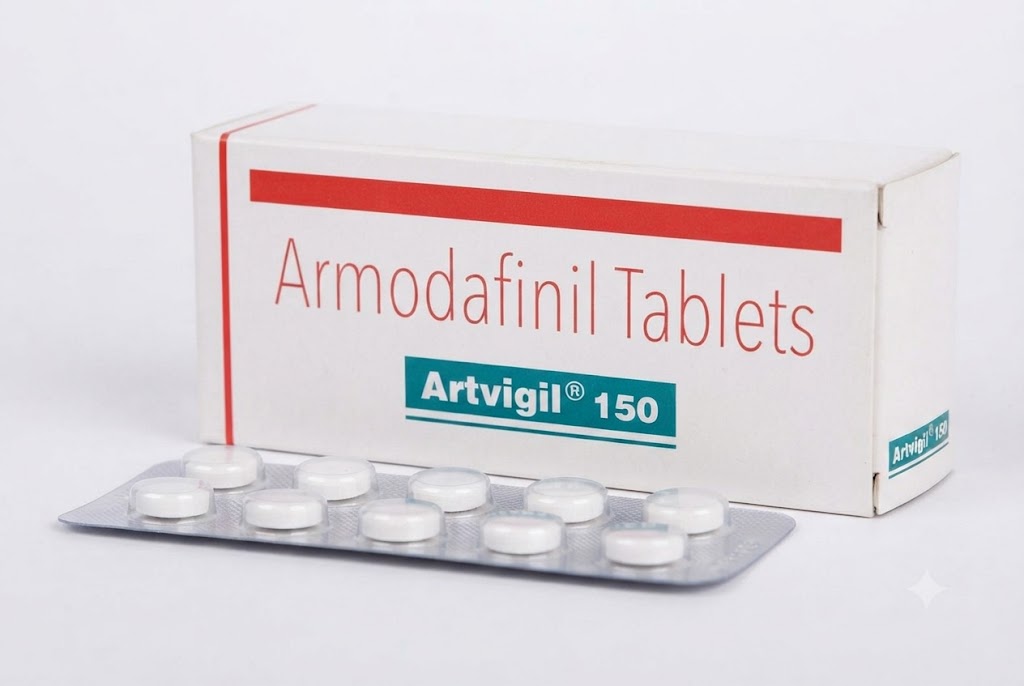

Armodafinil: Uses, Dosage, Side Effects, and Safety Guide
Armodafinil isn’t really a separate drug from modafinil — it’s the purified, single-isomer version of it. Because modafinil is a 1:1 mixture of two mirror-image molecules that clear from the body at different rates, isolating the longer-lasting one (R-modafinil) as armodafinil produces a more potent, more sustained effect at a lower milligram dose. Beyond that pharmacokinetic difference, armodafinil shares nearly all of modafinil’s approved uses, warnings, and risks.
The information below reflects current FDA prescribing information for armodafinil. It’s meant for general education, so it doesn’t replace advice from a licensed prescriber or pharmacist.
Product Overview
What Is Armodafinil?
Armodafinil is a wakefulness-promoting agent and the R-enantiomer of modafinil, isolated and marketed on its own starting in 2007 under the brand name Nuvigil. Because armodafinil clears the body more slowly than the S-isomer that gets removed when modafinil is split into its two halves, a given milligram amount of armodafinil produces higher, more sustained drug levels than the same amount of modafinil.
Active Ingredient
The active ingredient is armodafinil, chemically the R-(-)-enantiomer of the racemic compound modafinil.
Brand Name and Generic Name
The original brand name, Nuvigil, was manufactured by Cephalon. Generic armodafinil tablets are now available from multiple manufacturers.
Drug Classification
Armodafinil belongs to the same drug class as modafinil: wakefulness-promoting agents, distinct in structure from amphetamines and methylphenidate. Because of its documented abuse potential, the DEA classifies it as a Schedule IV controlled substance.
FDA-Approved Uses
Armodafinil is approved to improve wakefulness in adults with excessive sleepiness associated with:
- Narcolepsy
- Obstructive sleep apnea (OSA) — for the excessive sleepiness specifically, not as treatment for the underlying obstruction
- Shift work disorder (SWD)
As with modafinil, patients being treated for OSA-related sleepiness should continue CPAP therapy or another primary OSA treatment alongside armodafinil.
Evidence-Supported Off-Label Uses
Armodafinil has drawn research interest for ADHD, building on similar findings with modafinil, though it hasn’t gained approval for this use. It was also studied as an add-on treatment for schizophrenia, but that research program was terminated after a key trial failed to meet its main goals. Separately, the FDA specifically declined to approve armodafinil for jet lag in 2010. Because none of these represent approved indications, any such use would be off-label and should only happen under individualized prescriber judgment.
How It Works
The exact mechanism behind armodafinil’s wake-promoting effect remains unknown, much like modafinil. It binds to the dopamine transporter and inhibits dopamine reuptake, functioning as a selective, atypical dopamine reuptake inhibitor, without directly activating dopamine receptors the way amphetamines do. This shared mechanism with modafinil makes sense, since armodafinil is simply modafinil’s more active half.
Product Information Table
| Attribute | Detail |
|---|---|
| Brand | Nuvigil (original); now widely available generically |
| Generic | Armodafinil |
| Active Ingredient | Armodafinil (R-modafinil) |
| Drug Class | Wakefulness-promoting agent |
| Manufacturer | Originally Cephalon; now multiple generic manufacturers |
| Prescription Status | Prescription only |
| Controlled Drug Schedule | Schedule IV (CIV) |
| Dosage Forms | Tablet |
| Strengths | 50 mg, 150 mg, 200 mg, 250 mg |
| Administration Route | Oral |
| Onset of Action | Peak levels reached in about 2 hours fasted; food can delay this by 2–4 hours |
| Duration of Effect | Once-daily dosing; effects last longer than an equivalent dose of modafinil |
| Half-Life | Approximately 15 hours, with steady state reached after about 7 days of dosing |
| Storage | Room temperature, 68–77°F (20–25°C) |
Available Strengths
Armodafinil comes in four strengths, giving prescribers more flexibility than modafinil’s two-strength lineup.
| Strength | Dosage Form | Typical Use |
|---|---|---|
| 50 mg | Tablet | Roughly equivalent in drug levels to 100 mg of modafinil |
| 150 mg | Tablet | Standard dose for OSA, narcolepsy, or shift work disorder |
| 200 mg | Tablet | Intermediate dose option |
| 250 mg | Tablet | Higher end of the studied dose range for OSA or narcolepsy |
Because generic armodafinil tablets can vary in appearance by manufacturer, patients should confirm with their pharmacist if a refilled tablet looks unfamiliar.
Dosage Guide
Like modafinil, armodafinil follows a flat dose per indication rather than weight-based titration.
Narcolepsy or OSA
The recommended dose ranges from 150 mg to 250 mg, taken once daily as a single dose in the morning. Both 150 mg and 250 mg have been studied and used in clinical practice, with the specific dose chosen based on individual response and tolerability.
Shift Work Disorder
The recommended dose is 150 mg taken once daily, approximately one hour before the start of the work shift.
Adults Only
Because armodafinil hasn’t been studied in pediatric patients in any setting, and isn’t approved for pediatric use for any indication, all of the dosing guidance above applies specifically to adults.
Older Adults
Since one open-label study found reduced clearance and a longer half-life in patients over 65, prescribers typically consider a lower dose in this age group. Formal safety and effectiveness data in patients over 65 haven’t been systematically evaluated, so this recommendation reflects general caution as much as specific study findings.
Kidney Disease
The label doesn’t detail specific dosing adjustments for kidney impairment, similar to modafinil’s general pattern where kidney function plays a smaller role in clearance than liver function does.
Liver Disease
Because armodafinil, like modafinil, undergoes significant hepatic metabolism, severe hepatic impairment calls for a reduced dose. A prescriber determines the specific adjustment based on the degree of impairment.
How to Take It
With or Without Food
Patients can take armodafinil with or without food, though the effect of food is more pronounced here than with modafinil. A meal can delay peak levels by two to four hours and raise plasma levels later in the day, which can shift both the onset and duration of armodafinil’s effect.
Timing Matters by Indication
For narcolepsy or OSA, armodafinil is taken in the morning. For shift work disorder, timing shifts to about an hour before the work shift begins, aligning wakefulness with the specific hours it’s needed.
Missed Dose
Because narcolepsy and OSA dosing follows a single morning dose, a missed dose is typically just skipped rather than taken later, since armodafinil’s long half-life means a late dose could interfere with nighttime sleep well into the following day. Patients should check with their prescriber for guidance specific to their situation.
Overdose
Because armodafinil overdose can cause agitation, confusion, hallucinations, an irregular heartbeat, or dangerously elevated blood pressure, anyone who suspects an overdose should call Poison Control at 1-800-222-1222 or seek emergency medical care right away.
Storage and Disposal
Patients should store armodafinil in a secure, ideally locked, location at room temperature. Because it’s a controlled substance, a DEA-authorized take-back program is the preferred disposal method; alternatively, mixing unused tablets with an undesirable substance such as used coffee grounds before sealing and discarding them in household trash is an accepted method.
Benefits
Because armodafinil concentrates modafinil’s more active isomer into a single formulation, it can provide more consistent, longer-lasting wakefulness from a single daily dose. Its four available strengths also give prescribers finer control when titrating to the lowest effective dose than modafinil’s two-strength lineup allows.
Side Effects
Because armodafinil shares its parent compound’s mechanism, its side effect profile closely resembles modafinil’s.
Common Side Effects
- Headache
- Nausea
- Dizziness
- Insomnia
- Nervousness or agitation
Less Common Side Effects
- Dry mouth
- Anxiety
- Irritability
- Elevated blood pressure
- Increased heart rate
Serious Side Effects
- Serious rash, including Stevens-Johnson syndrome, toxic epidermal necrolysis, or DRESS syndrome
- Angioedema or anaphylaxis
- Multi-organ hypersensitivity reactions
- New or worsening psychiatric symptoms, including agitation, confusion, depression, hallucinations, or rare thoughts of suicide
- Cardiovascular events, particularly in patients with mitral valve prolapse or left ventricular hypertrophy
Emergency Symptoms
Because these signs can indicate a medical emergency, patients should seek immediate care for:
- Any new rash, especially with fever, blistering, or peeling skin
- Swelling of the face, eyes, lips, tongue, or throat, or difficulty breathing or swallowing
- Chest pain, an irregular heartbeat, or fainting
- New hallucinations, suicidal thoughts, or severe agitation
Drug Interactions
Because armodafinil affects the same liver enzymes as modafinil, its interaction profile closely mirrors its parent compound’s.
Prescription Drugs
Armodafinil speeds up the breakdown of drugs metabolized by CYP3A4/5, which can reduce their effectiveness. In the opposite direction, it can slow the breakdown of CYP2C19 substrates, potentially raising their blood levels. Caution applies when combining armodafinil with MAOIs.
OTC Medicines
Because acid reducers and other medications affected by CYP2C19 activity can interact with armodafinil, patients using them regularly should mention this to their prescriber.
Alcohol
The label doesn’t detail a specific interaction between alcohol and armodafinil, but combining any wakefulness-promoting agent with alcohol can mask impairment, so caution is still warranted.
Supplements
No specific supplement interactions are flagged in the current label, but patients should disclose all supplement use to their prescriber regardless.
Herbal Products
As with supplements generally, herbal products affecting liver enzyme activity or blood pressure deserve the same disclosure and caution.
Hormonal Contraceptives
Like modafinil, armodafinil reduces the effectiveness of steroidal contraceptives by speeding up their metabolism. This effect lasts through treatment and for a period afterward, so patients need an alternative or backup contraceptive method during that window.
Warnings
Armodafinil carries the same serious rash warning as modafinil, covering Stevens-Johnson syndrome, toxic epidermal necrolysis, and DRESS syndrome. Because no factors reliably predict who will develop a serious reaction, the label instructs discontinuing armodafinil at the first sign of any rash unless it’s clearly unrelated to the drug.
Beyond the rash risk, armodafinil carries warnings for angioedema, anaphylaxis, and multi-organ hypersensitivity reactions. It can also cause persistent sleepiness even during treatment, so patients should be reassessed regularly and cautioned about driving if sleepiness continues. In pre-approval trials, anxiety, agitation, nervousness, and irritability led to treatment discontinuation more often with armodafinil than placebo, and cardiovascular monitoring matters too, since small but consistent increases in blood pressure and pulse showed up in clinical trials.
Contraindications
Patients shouldn’t take armodafinil if they:
- Have a known hypersensitivity to armodafinil, modafinil, or the product’s inactive ingredients
Because armodafinil and modafinil share the same active molecule in different proportions, a documented allergy to one generally rules out the other as well.
Pregnancy
No adequate, well-controlled studies exist in pregnant women, and animal studies of both armodafinil and modafinil showed developmental toxicity at clinically relevant exposures. Cases of intrauterine growth restriction and spontaneous abortion have been reported in association with armodafinil use, though whether these cases were actually caused by the drug remains unclear. Because of this uncertainty, armodafinil should be used during pregnancy only if the potential benefit clearly justifies the potential risk to the fetus, and reliable contraception matters given armodafinil’s effect on hormonal birth control.
Breastfeeding
The label doesn’t provide specific human data on whether armodafinil passes into breast milk. Because many medications do transfer into human milk, caution is advised when armodafinil is used by a nursing parent.
Monitoring Requirements
Throughout treatment, prescribers typically monitor:
- Any new rash, at every visit and between visits
- Blood pressure and heart rate, especially given the small but consistent increases seen in trials
- Ongoing degree of sleepiness, to confirm wakefulness has genuinely improved
- Signs of new or worsening psychiatric symptoms, including anxiety, agitation, or depression
- Signs of misuse or escalating dose-seeking behavior, particularly in patients with a prior history of stimulant or substance misuse
Storage Instructions
Patients should store armodafinil at room temperature, between 68°F and 77°F (20°C and 25°C), in a secure, ideally locked, location, since it is a federally controlled substance.
Frequently Asked Questions
What is armodafinil used for?
Armodafinil improves wakefulness in adults with excessive sleepiness caused by narcolepsy, obstructive sleep apnea, or shift work disorder — the same three conditions modafinil treats. For OSA specifically, it addresses the sleepiness rather than the underlying breathing obstruction, so patients typically continue CPAP therapy alongside it.
Is armodafinil the same as modafinil?
Not quite, though they’re closely related. Modafinil is a 50/50 mixture of two mirror-image molecules, while armodafinil is just the longer-lasting half of that mixture, isolated and concentrated. Because of this, armodafinil produces more sustained effects at a lower milligram dose — roughly 50 mg of armodafinil compares to about 100 mg of modafinil in terms of drug levels.
What is the typical dose of armodafinil?
For narcolepsy or OSA, the dose ranges from 150 mg to 250 mg once daily in the morning. For shift work disorder, it’s 150 mg once daily, taken about an hour before the work shift starts.
Can armodafinil be taken by children?
No. Armodafinil hasn’t been studied in pediatric patients in any setting, and it isn’t approved for any pediatric indication. This mirrors modafinil’s own pediatric restrictions, which stem partly from a documented rash risk in younger patients during related clinical trials.
Why does armodafinil last longer than modafinil?
Because armodafinil is chemically identical to just the R-isomer portion of modafinil, and that particular isomer clears from the body more slowly than its mirror-image counterpart. When both isomers are present together in modafinil, the faster-clearing S-isomer doesn’t change how long the R-isomer sticks around, but isolating the R-isomer alone as armodafinil means every dose consists entirely of the longer-acting form.
Does food affect armodafinil?
Yes, more noticeably than with modafinil. While food doesn’t significantly change the total amount absorbed, it can delay peak blood levels by two to four hours and raise levels later in the day, which can shift when armodafinil’s wakefulness-promoting effect actually kicks in.
What is the serious rash risk with armodafinil?
Armodafinil carries the same genuine risk of serious skin reactions as modafinil, including Stevens-Johnson syndrome, toxic epidermal necrolysis, and DRESS syndrome. Because no factors reliably predict who will develop a serious reaction, patients should stop taking armodafinil and seek medical care at the first sign of any new rash.
Is armodafinil addictive?
It carries meaningful abuse potential, similar to modafinil. Because armodafinil is essentially modafinil’s active component, it shares the same reinforcing, psychoactive effects that led to Schedule IV classification. It doesn’t appear to cause a significant withdrawal syndrome after typical use, but prescribers still monitor for signs of misuse.
What are the most common side effects of armodafinil?
The most frequently reported side effects include headache, nausea, dizziness, and insomnia. Nervousness and agitation also appear commonly enough to be a noted reason some patients discontinue treatment.
Can armodafinil interact with other medications, including birth control?
Yes. Armodafinil speeds up the breakdown of hormonal contraceptives and other CYP3A4-metabolized drugs, reducing their effectiveness, while slowing the breakdown of certain other medications and raising their levels instead. Patients using hormonal birth control need an alternative or backup method while taking armodafinil.
Is armodafinil safe during pregnancy?
No adequate human studies exist, and animal studies of both armodafinil and modafinil showed developmental toxicity at relevant doses. Armodafinil should only be used during pregnancy if the potential benefit clearly outweighs this uncertain risk, and anyone who is pregnant or planning pregnancy should discuss this directly with their prescriber.
Can older adults take armodafinil?
Yes, typically at a lower dose. Because clearance slows and half-life lengthens with age based on available data, prescribers usually reduce the starting dose and monitor more closely in patients over 65, even though formal safety studies in this age group remain limited.
Was armodafinil ever considered for jet lag?
Yes, but the FDA specifically declined to approve it for that use in 2010. Armodafinil’s approved indications remain limited to narcolepsy, OSA-related sleepiness, and shift work disorder.
Does armodafinil cure sleep apnea?
No. For OSA specifically, armodafinil only addresses the excessive daytime sleepiness that results from the condition — it doesn’t treat the underlying airway obstruction. Patients typically need to continue CPAP therapy or another primary OSA treatment alongside armodafinil.
What should I do if too much armodafinil was taken?
Suspected overdose warrants prompt medical attention, since symptoms can include agitation, confusion, hallucinations, an irregular heartbeat, or dangerously high blood pressure. Patients should call Poison Control at 1-800-222-1222 or go to the nearest emergency room, particularly if other substances were involved.
Conclusion
Because it shares modafinil’s mechanism, it also shares modafinil’s full warning profile — the serious rash risk, Schedule IV abuse potential, cardiovascular monitoring needs, and contraceptive interaction — so the choice between the two often comes down to duration of action and dosing preference rather than a meaningfully different risk-benefit tradeoff. Patients switching between the two, or starting either for the first time, benefit from understanding that they’re working with close relatives of the same molecule rather than two unrelated drugs.
| Tablets | 60 Tablets, 120 Tablets, 200 Tablets, 300 Tablets, 400 Tablets, 500 Tablets |
|---|
Be the first to review “Armodafinil”
Related products
Opioid Medications
Opioid Medications

Opioid Medications
Opioid Medications
Opioid Medications
Pain Relief
Reviews
There are no reviews yet.